A Mont-Saint-Michel day trip from Paris is possible, but it is a long one. The tidal island and its abbey sit on Normandy's far western edge, roughly three and a half to four hours each way by train and bus or by car, so a single day means an early start and a late return. Most people who try it are glad they went and wish they had stayed longer.
The better plan for many travelers is two days: the Mont on one, and either Bayeux and the D-Day beaches or the chalk cliffs of Étretat on the other. This guide covers the logistics (trains, the shuttle, tides), what to do on the rock, the best Normandy add-ons, and an honest take on one day versus two. For more on the country, see our France travel guides.
How to Get from Paris to Mont-Saint-Michel
There is no train station on the Mont itself. The nearest station is Pontorson, a few kilometers inland, and the usual public transport routes combine a fast train out of Paris Montparnasse with a bus. Timetables and operators change, so check the live schedule on SNCF Connect and the Mont-Saint-Michel tourist office before you book.
| Option | How it works | Typical total time one way | Best for |
|---|---|---|---|
| Train + bus via Rennes | TGV from Paris Montparnasse to Rennes, then a regional bus to the Mont | Around 3.5 hours | Travelers without a car, with a sensible morning start |
| Train via Pontorson | Train services toward Pontorson, then a short bus or shuttle ride | Roughly 3.5 to 4 hours | Fewer bus legs, but fewer departures |
| Self-drive | Highway west via Normandy to the parking lots on the mainland | Around 4 hours without traffic | Combining the Mont with Bayeux or the coast |
| Organized day tour | Coach from Paris with a fixed stop on the Mont | A very long day, usually 12 hours or more | People who want zero logistics |
Whichever way you go, finalize your return before you commit. Public transport back to Paris thins out in the evening, and missing the last connection is the classic way a day trip goes wrong. Build in a buffer of an hour or more rather than planning to the minute.
Driving and parking
Cars do not go onto the island. Since the causeway was replaced by a bridge, the parking lots sit on the mainland about 2.5 kilometers from the Mont. The parking fee includes the Le Passeur shuttle, which carries you to the foot of the rock in about a dozen minutes. Fees vary with season and length of stay, so look at the current rate on the official tourism office site instead of trusting a blog post.
You can also walk the 2.5 kilometers along the bridge. It takes roughly half an hour and is the best way to watch the silhouette grow, so do it at least one way if the weather is decent.
What to Know About the Mont and the Tides
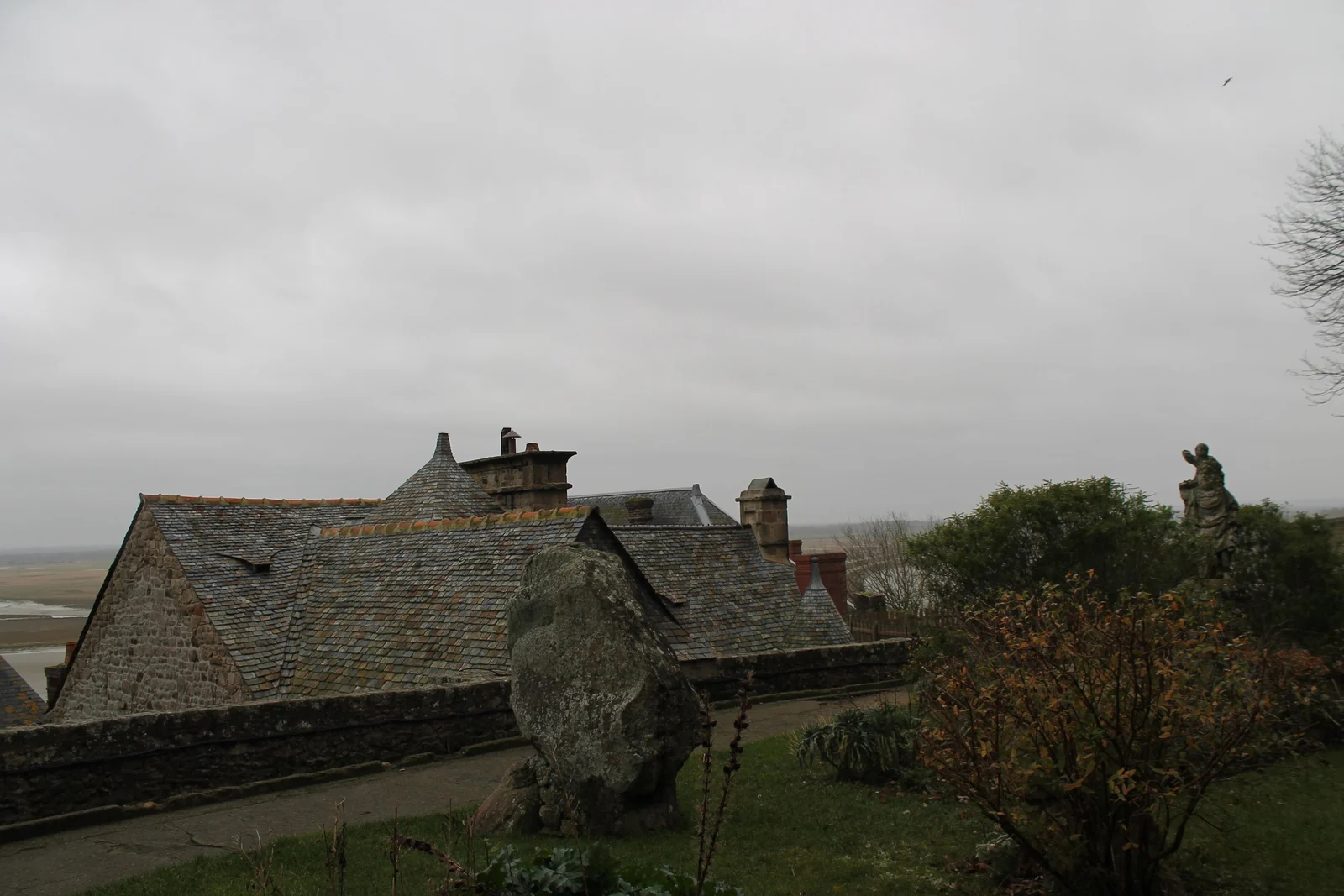
Mont-Saint-Michel is a granite island in a bay where the sea retreats for miles and returns fast. The tidal range here is among the largest in continental Europe, roughly 14 meters between low and high water, and at the biggest tides the Mont briefly becomes an island again. The abbey and its bay have been a UNESCO World Heritage Site since 1979.
Tradition dates the first church to 708, when the archangel Michael is said to have appeared to Aubert, bishop of Avranches. Benedictine monks settled in the tenth century, and the abbey grew over the following centuries into the stack of Romanesque and Gothic buildings you see today. After the French Revolution it served as a prison, which is part of why the structure survived so intact.
Tides and safety
For most visitors, the tides simply decide the view. At high tide the water laps close to the walls, and at low tide you see a vast expanse of sand. Check the published tide times and coefficients on the tourist office site if the spectacle matters to you, since the very highest tides are a few days a year and worth planning around.
Do not wander out onto the bay by yourself. The flats hide quicksand-like patches and the water returns quickly. Walks across the sands are offered by licensed guides, and that is the only sensible way to do it.
Visiting the Abbey and Village
The village is a single steep street, the Grande Rue, lined with souvenir shops, small museums and restaurants, and it feels crowded by late morning. The permanent population is tiny, a few dozen people. Walk up early or late and the lane becomes something close to the medieval place it was.
The abbey at the top is the point of the visit. Tickets can be booked online on the official site, and hours vary by season, with occasional changes on specific days, so check the schedule before you travel. Allow at least two hours inside.
Highlights inside
- The abbey church: perched at the summit, with the Romanesque nave and a later Gothic choir. The view back over the bay from the terrace is the best on the Mont.
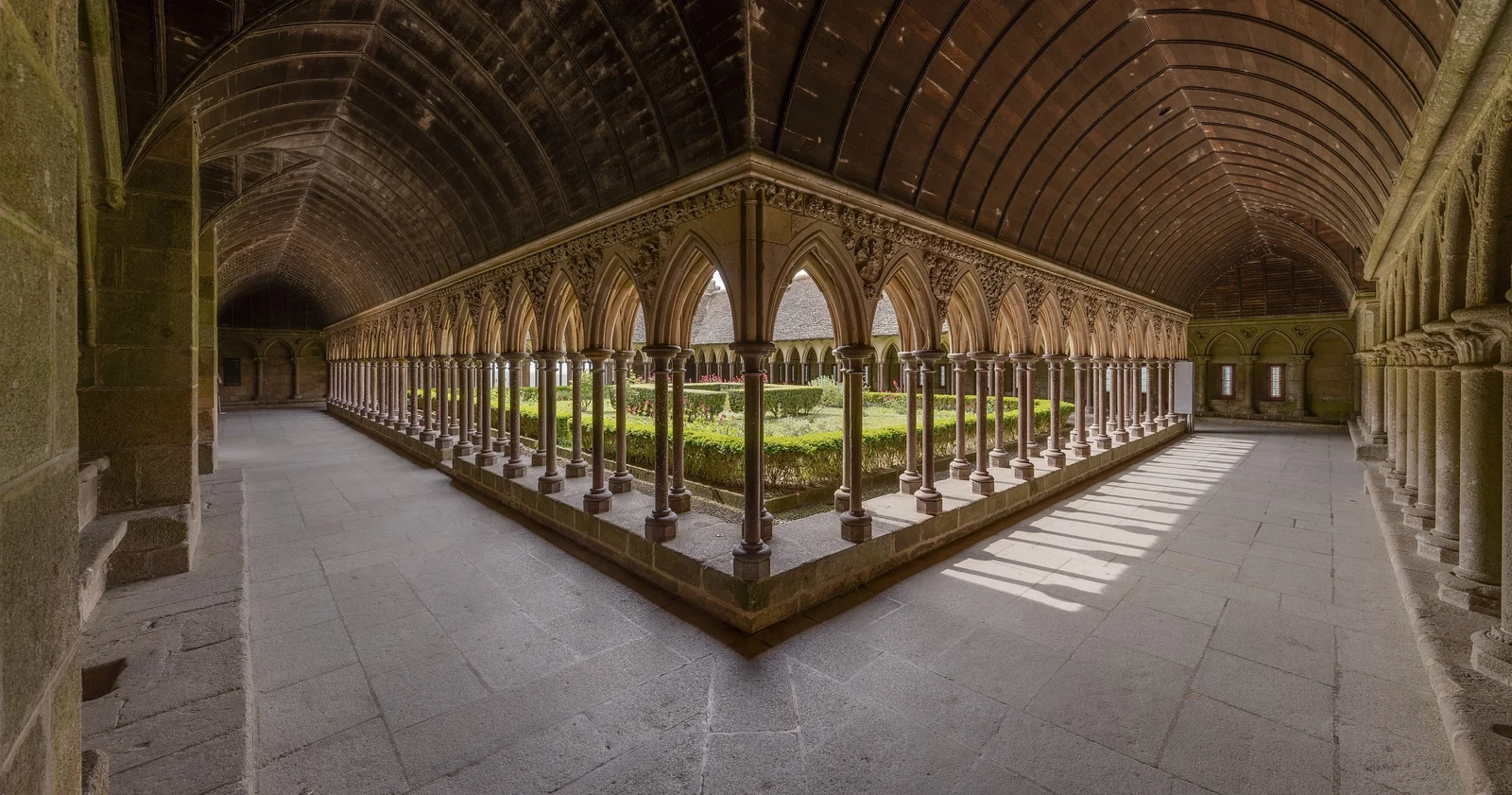
- The Merveille: the three-story Gothic complex on the north side, built in the early thirteenth century, holding the refectory and the cloister.
- The cloister: a quiet arcaded garden suspended high above the sea, and a good place to slow down.
- The ramparts: the walls and towers below the abbey can be walked for views along the coast, and they are usually less busy than the main street.
One practical tip: wear shoes with grip. The steps and cobbles are steep, worn and slippery after rain, and there is no avoiding them.
Where to eat
The Mont is known for its omelettes, and La Mère Poulard is the famous name, but expect tourist prices. The local specialty worth trying is salt-meadow lamb from the surrounding bay. For a cheaper, calmer meal, many visitors eat on the mainland side near the parking lots instead.
One Day or Two Days: What Works Best
If you only have time for one day, go. Take an early train, reach the Mont by late morning, climb to the abbey first while the lane is quiet, and leave the shops for last. You will see the essentials and get home tired.
If you can, stay a night. An overnight on the island or in nearby Pontorson lets you see the Mont after the day crowds have left and in the morning light, which is when it looks best. It also gives you a base for a second stop in the region the next day.
| Plan | What you get | The catch |
|---|---|---|
| One day, Mont only | Abbey, ramparts, village, bay views | Very long travel day, little margin for delays |
| Two days, Mont plus Bayeux and D-Day beaches | Abbey, then the tapestry and the American cemetery | Needs a car or a guided tour for the beaches |
| Two days, Mont plus Étretat | Abbey, then dramatic chalk cliffs on the Alabaster Coast | Long drive between the two, so choose one or the other as your second stop |
Bayeux and the Bayeux Tapestry
Bayeux is the most rewarding Normandy add-on for history lovers. The town escaped heavy damage in 1944, so its medieval center and cathedral are intact. It also holds the Bayeux Tapestry, an embroidered cloth of roughly 70 meters that tells the story of the Norman Conquest of England in 1066. It dates from the eleventh century and is one of the most famous medieval artworks in Europe.
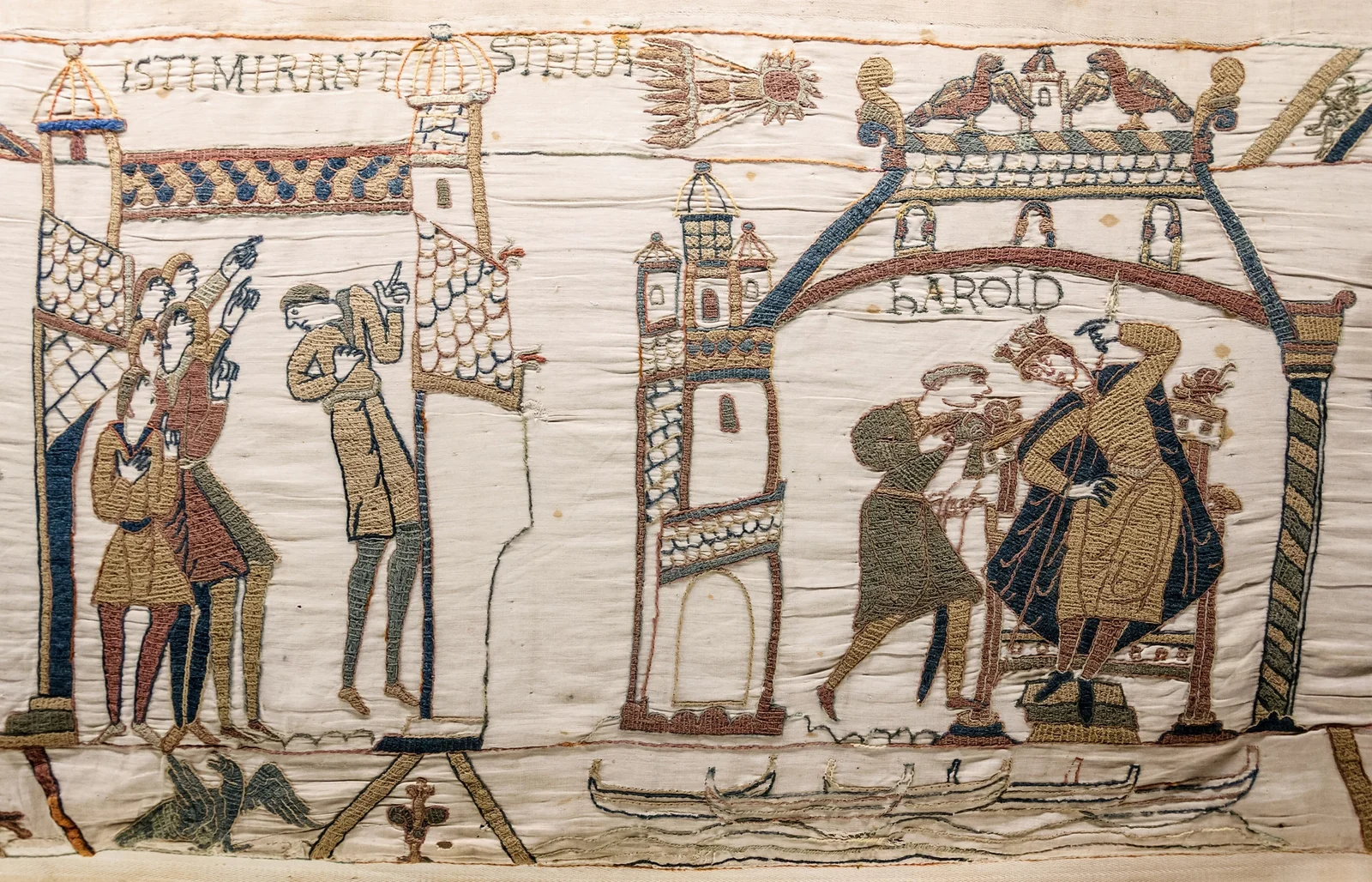
Display arrangements for the tapestry can change, including loans and building work, so confirm what is on show on the Bayeux Museum website before you build a day around it. The town is about two to two and a half hours from Paris by direct train, which makes it feasible as its own day trip as well.
The D-Day Beaches
The Allied landings of June 6, 1944 took place along the Normandy coast, and the beaches, cemeteries and museums stretch for dozens of kilometers west and east of Bayeux. Omaha Beach is the best known for American visitors. The Normandy American Cemetery at Colleville-sur-Mer overlooks it and holds the graves of thousands of US service members. It is a solemn place, and it is free to enter.
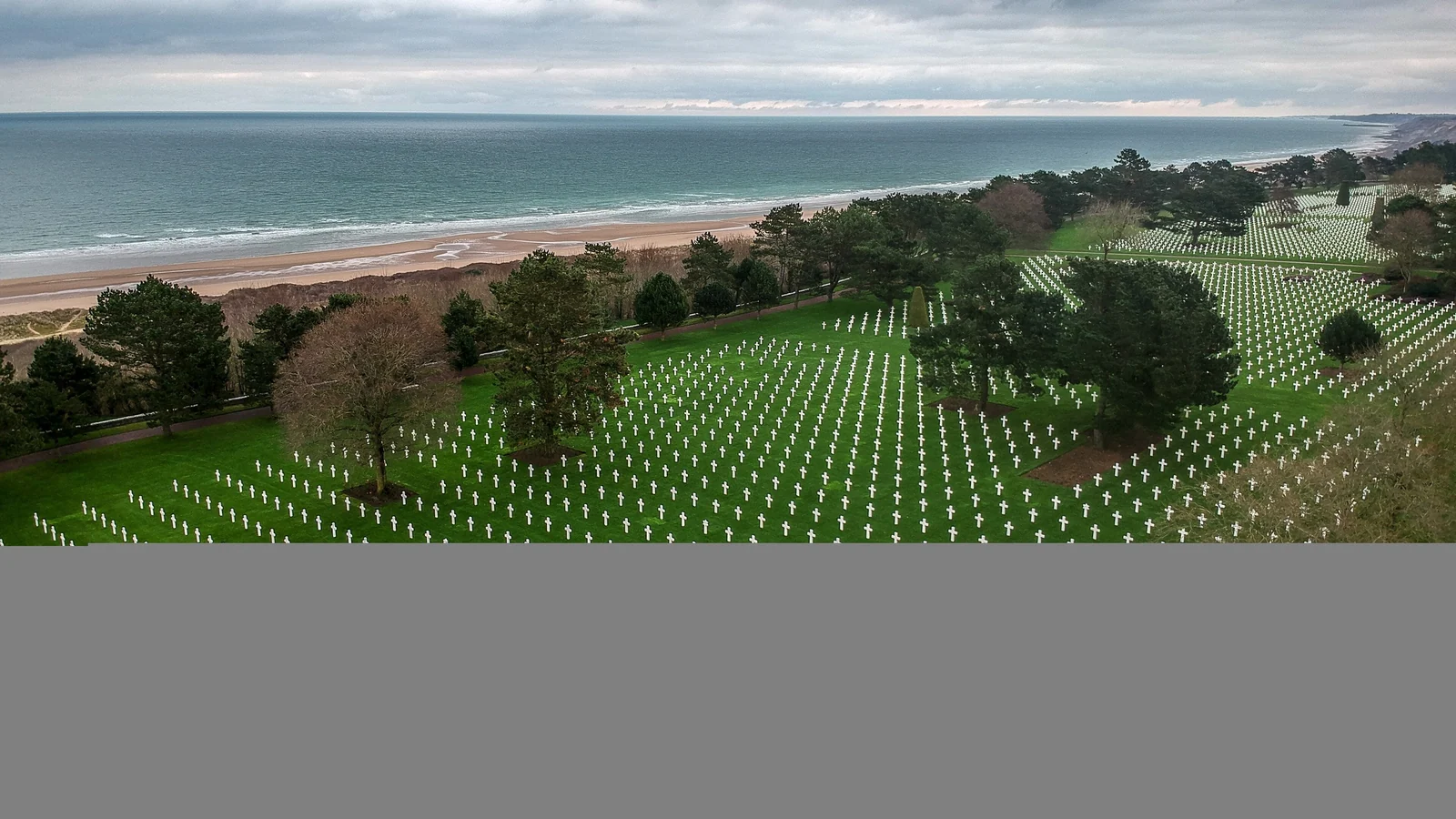
Seeing several sites in one day, such as Omaha, Pointe du Hoc and Arromanches, is hard without a car, so many travelers join a small-group tour from Bayeux. Plan a full day, and read the American Battle Monuments Commission pages for opening times and visitor information.
Étretat and the Alabaster Coast
Étretat lies in the other direction, on the English Channel coast north of Le Havre. Its white chalk cliffs and natural arches made it a favorite of painters, Claude Monet among them. Walk up either side of the shingle beach for views of the Porte d'Aval arch and the needle rock beside it.
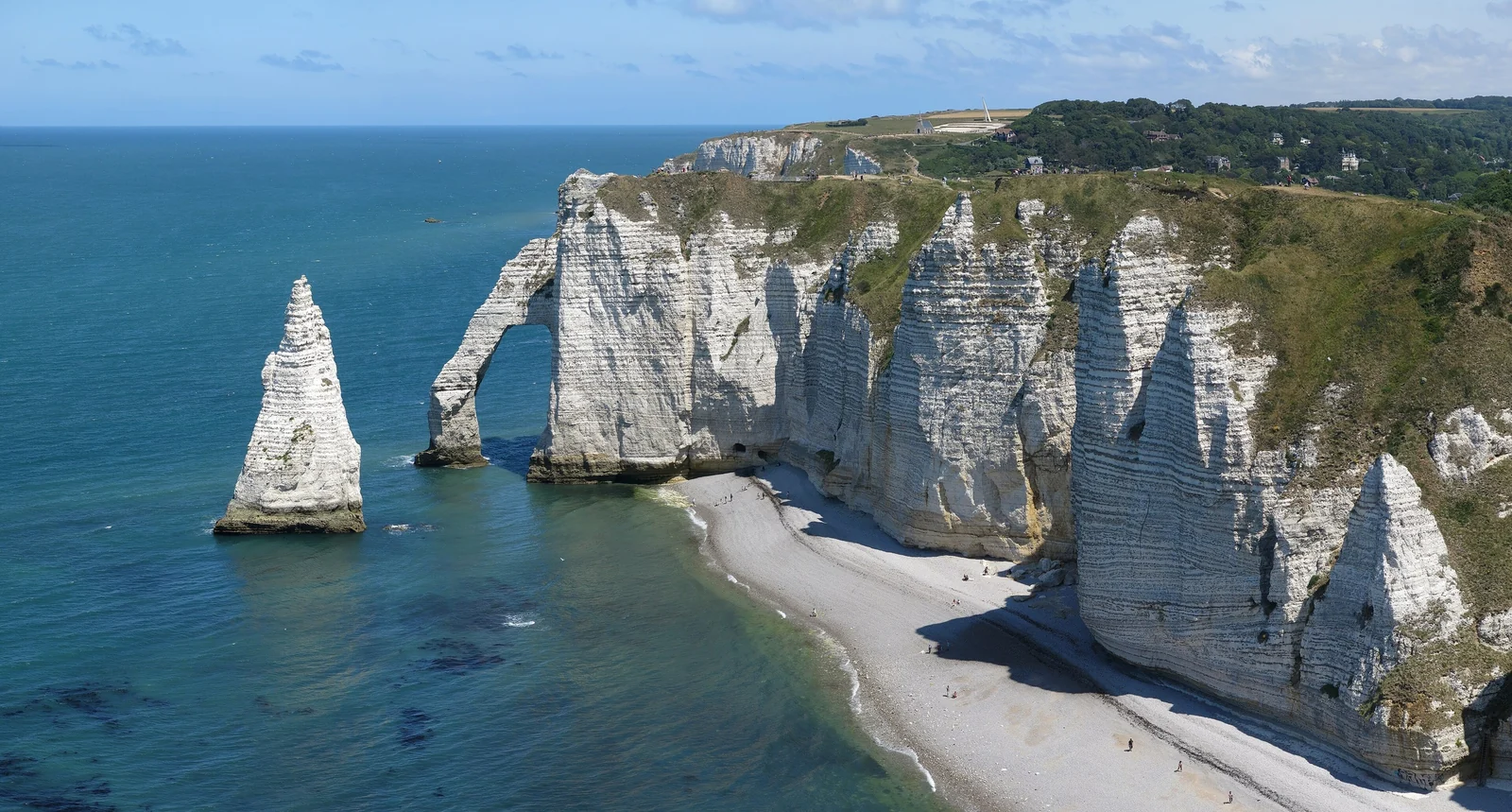
It is roughly two and a half hours from Paris by car, and without a car it is a slow trip. As a Paris day trip, Étretat pairs better with Rouen or Honfleur than with the Mont. If your priority is the abbey, treat Étretat as a separate outing.
Best Time to Visit Normandy and the Mont
- Spring and early autumn: milder weather and fewer people than midsummer, my pick for most visitors.
- July and August: the busiest and most expensive period, with crowded lanes by mid-morning. Arrive at opening time or late afternoon.
- Winter: quiet and atmospheric, but short days, rain and a lighter transport schedule.
- Any season: bring a windproof layer. The bay is exposed, and weather changes quickly in Normandy.
Whatever the season, the day you go will matter less than the hour. Early morning and evening are the two times the Mont looks the way people imagine it.
Practical Tips
- Book your abbey ticket and your return transport before you leave Paris, especially in summer.
- Carry a light bag. There are many steps and no way to drive closer.
- Check the day's tide times and coefficient if you want to see the Mont surrounded by water.
- Bring some cash and a card. Small shops and cafés on the Mont vary in what they accept.
- If you want another French city on the same trip, see our guides to Lyon and Provence, or the list of castles in France.
Mont-Saint-Michel Day Trip FAQ
Can you do Mont-Saint-Michel as a day trip from Paris?
Yes, but it is long. Expect roughly three and a half to four hours each way by train and bus or by car. An early departure gives you a few hours on the island. Staying one night in the area makes the visit far more relaxed and lets you see the Mont in evening light.
How do you get from Paris to Mont-Saint-Michel without a car?
Take a train from Paris Montparnasse to Rennes or toward Pontorson, then a bus to the Mont. Schedules change and connections are limited, so check SNCF Connect and the tourist office before booking. Organized day tours from Paris are an alternative if you prefer no planning.
Is the shuttle to Mont-Saint-Michel free?
The Le Passeur shuttle from the mainland parking lots to the Mont is included in the parking fee for drivers, and public transport passengers can use it as well. You can also walk the roughly 2.5 kilometers along the bridge. Confirm current operating hours and any changes on the tourist office site.
When is the best time to visit Mont-Saint-Michel?
Spring and early autumn offer mild weather and thinner crowds. July and August are the busiest. Arriving early in the morning or staying until evening is better than any particular season, and checking tide times helps if you want to see the abbey surrounded by water.
Is it better to spend one day or two in Normandy?
Two days is more comfortable. Spend one on the Mont and a second in Bayeux and the D-Day beaches, which make sense together. Étretat is on the opposite side of the region, so it works better as a separate outing than as a second stop on the same trip.
Can you see the Bayeux Tapestry and Mont-Saint-Michel in one day?
Not realistically from Paris. The two sit on opposite sides of Normandy, and each deserves several hours. Visit the Mont on one day and Bayeux on another, and check the Bayeux Museum site beforehand for how the tapestry is currently displayed.
Is Mont-Saint-Michel worth visiting?
Yes, for the setting alone. A medieval abbey rising from a vast tidal bay is unlike anything else in France, and the UNESCO-listed site rewards time inside the abbey and on the ramparts. The main downside is the crowds, so go early or late.