Day trips from Amman are the easiest way to cover northern and central Jordan without changing hotels. From one base you can reach the Roman city of Jerash, the mosaic town of Madaba, the hilltop of Mount Nebo and the Dead Sea, each within roughly an hour or so of the capital by road.
This guide pairs those trips with Amman's own highlights, the Citadel and the old downtown, and turns it all into a three-day plan with transport, season and Jordan Pass basics. If Petra and Wadi Rum are also on your list, our Petra and Wadi Rum itinerary picks up where this one ends, and the wider Jordan travel guides cover the rest of the country.
Why Use Amman as a Base
Amman is not the prettiest capital in the Middle East, and it does not try to be. It is a hilly, sprawling city of pale limestone apartment blocks with a busy downtown, excellent cheap food and a growing café scene. What it does have is geography. Almost everything in the north and center of the country is a half-day or full-day drive from here, and the international airport is a short ride away.
Sleeping in the same bed for three or four nights also keeps the trips relaxed. You leave after breakfast, come back for dinner and never repack. The trade-off is time on the road, so pick a hotel where taxis and ride-hailing cars are easy to find, and limit yourself to one major excursion per day.
Amman: Citadel, Roman Theater and Downtown
Give Amman itself half a day, ideally on arrival or when you return from a trip. Under the Romans the city was called Philadelphia, and its ancient core still sits on the hills in the middle of town.
The Citadel
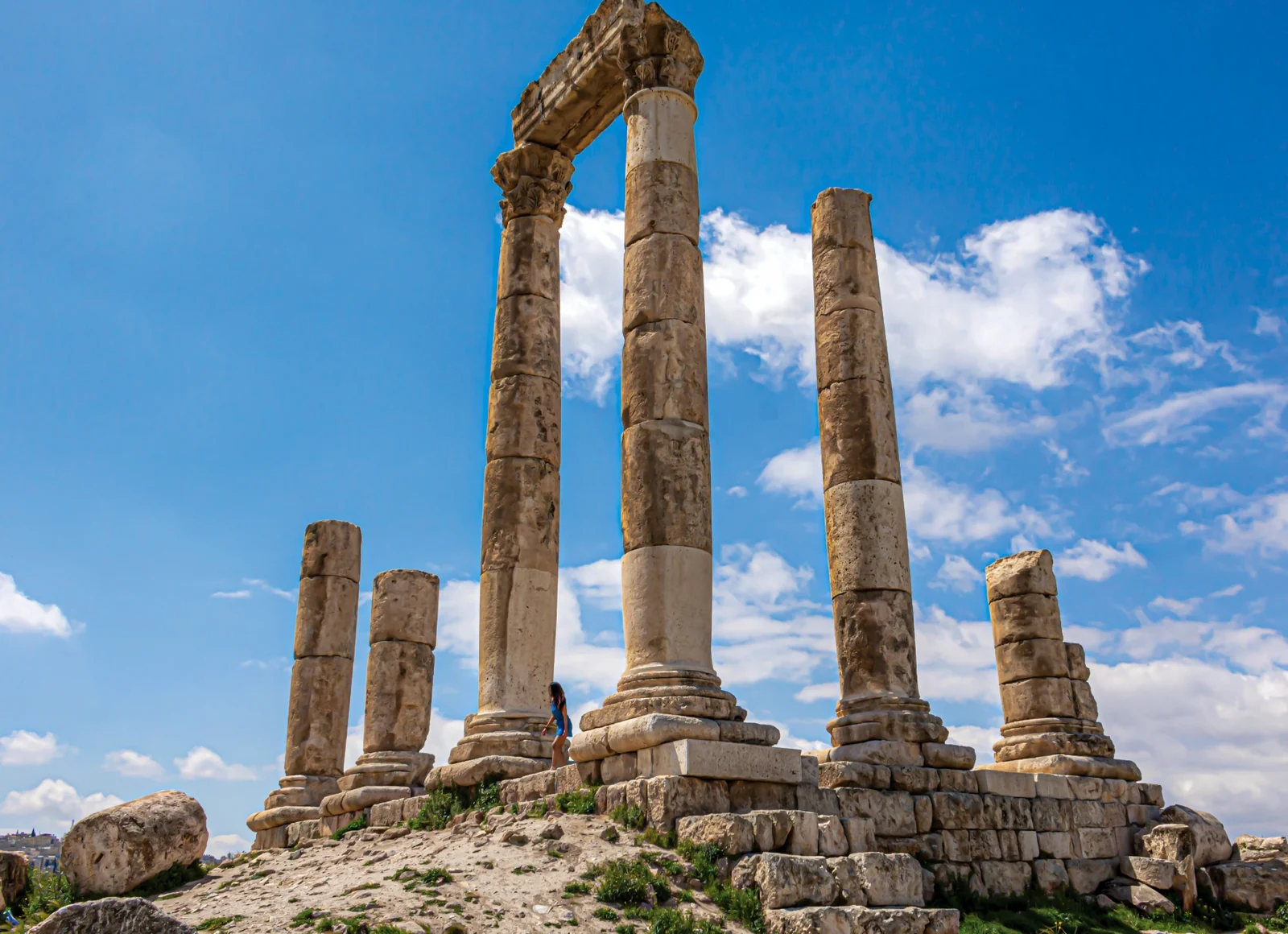
Jabal al-Qala'a, the Citadel hill, is the best first stop. The ruins include the columns of the Roman-era Temple of Hercules and an Umayyad palace complex from the early Islamic period. A small archaeological museum sits on the hill, and the terrace gives you a wide view over the packed rooftops of downtown. Come in the late afternoon for softer light and cooler air.
Roman Theater and the Souks
Below the Citadel, the Roman Theater, built in the second century, is cut into the hillside facing the main downtown square. Climb to the top rows for the view, then walk into the surrounding streets. The markets sell spices, coffee, sweets and household goods, and the old restaurants serve hummus, falafel and fuul at prices locals can afford.
In the evening, head to Rainbow Street and the Jabal Amman neighborhood for cafés, rooftop terraces and a more modern side of the city.
Jerash Day Trip: Roman Gerasa
Jerash is the best single day trip from Amman and one of the best-preserved Roman provincial cities in the region. Ancient Gerasa belonged to the Decapolis, a loose group of Greek-style cities in the eastern Roman world. It lies roughly an hour north of the capital, and most visitors spend about half a day inside the site.
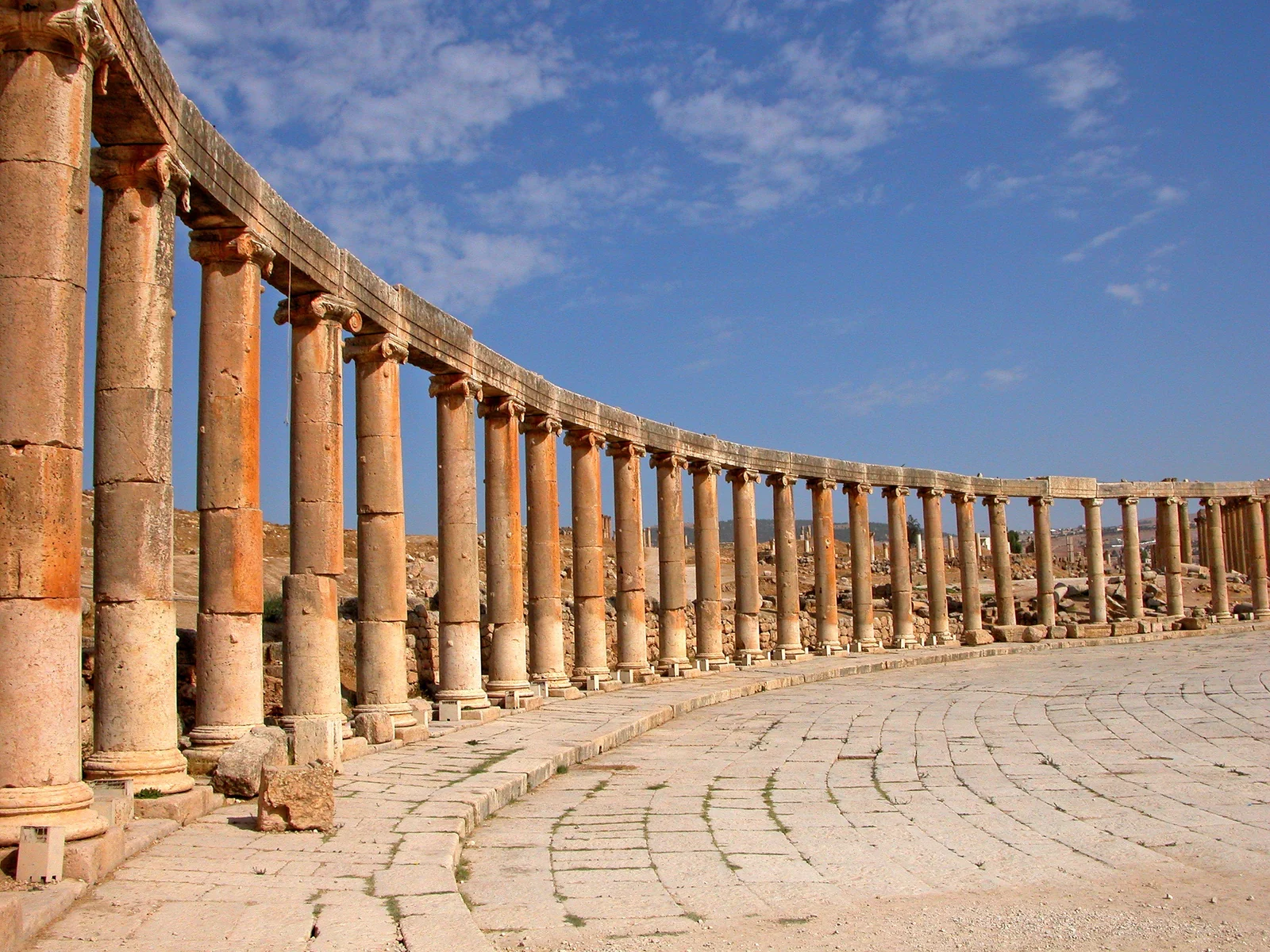
The site runs in a loose line, so walk it in order. Hadrian's Arch stands near the entrance. It was built around AD 129 to 130 to mark the visit of Emperor Hadrian, and it makes a dramatic gateway even though it now stands apart from the rest of the ruins. Beside it lies the Hippodrome, where chariot races were held.
Inside the main site, the Oval Plaza is the signature view: a wide open space ringed by columns, with the long colonnaded main street, the cardo, running north from it. Follow the cardo over paving worn by ancient carts, then continue to the Temple of Artemis and the theaters. Climb up wherever it is allowed for views over the whole site and the modern town beyond.
Tips for Visiting Jerash
- Go early. The ruins have little shade, and tour buses arrive from mid-morning.
- Wear sturdy shoes. The paving is uneven and polished smooth in places.
- Carry water and a hat, since the site is large and open.
- Check current hours and ticket details with the Jordan Tourism Board before you go; Jerash is also covered by the Jordan Pass (see below).
Madaba and Mount Nebo: Mosaics and a Biblical View
South of Amman, Madaba and Mount Nebo pair neatly into a half-day trip, or a full day if you add the Dead Sea afterward. Both lie along the old King's Highway corridor, and both reward visitors who care about history more than hiking.
Madaba
Madaba is a small, relaxed town known for Byzantine mosaics. The star is the Madaba Map in the Greek Orthodox Church of Saint George, a 6th-century floor mosaic that depicts the Holy Land and Jerusalem. Much of it has been damaged over the centuries, but the surviving portion is still remarkable, and the church is small enough that you can see it in under an hour.
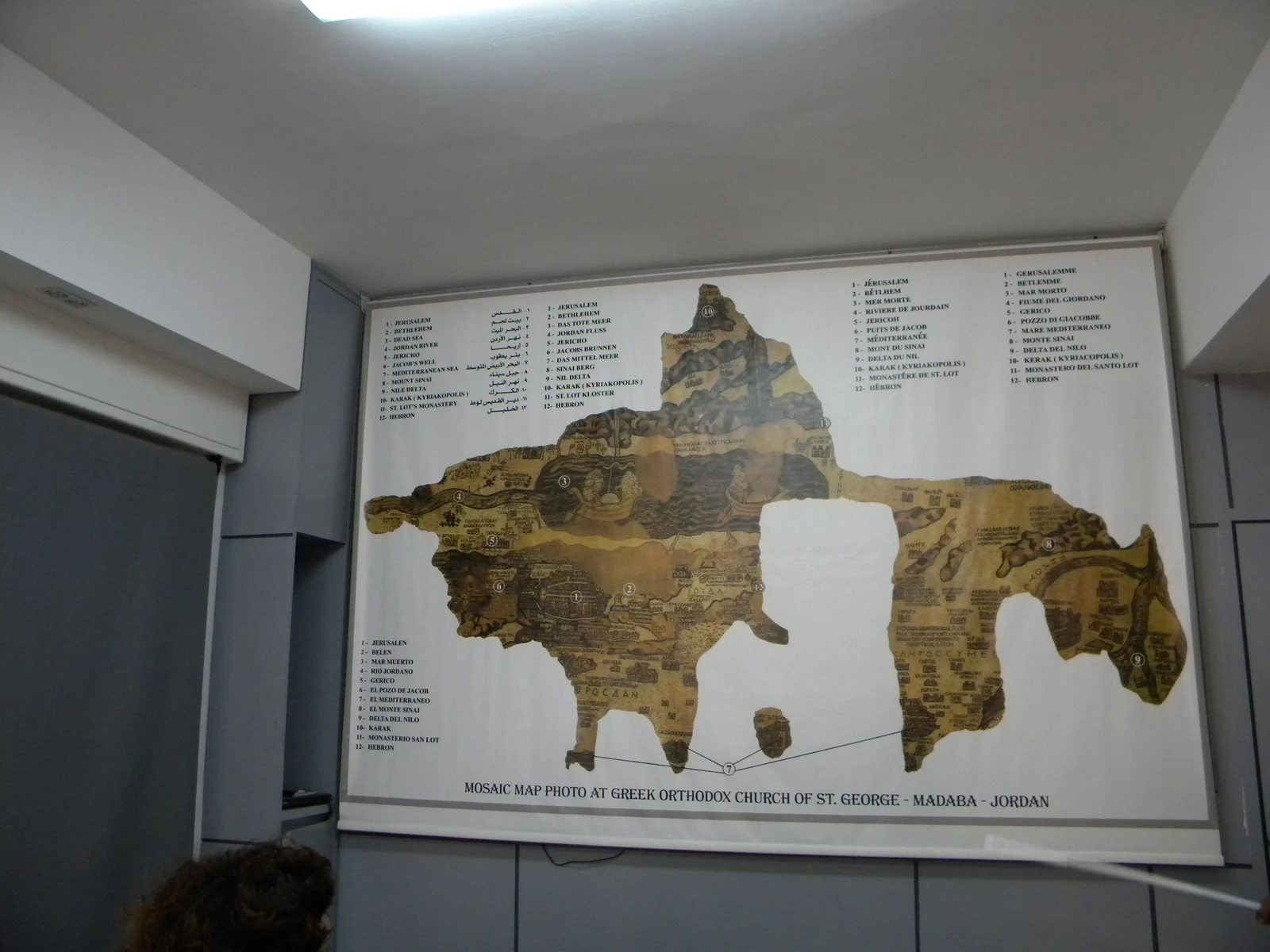
Madaba's archaeological park and other churches hold more mosaics, so stroll the center for an hour or two, then stop for coffee or a simple lunch.
Mount Nebo
Mount Nebo is traditionally identified as the place where Moses viewed the Promised Land. A Franciscan-run site on the summit holds the Memorial Church of Moses, with early Christian mosaics, and a terrace that looks out over the Jordan Valley and the Dead Sea. Haze often softens the view, so a clear morning is best.
The two stops fit comfortably in one morning, and the road continues downhill toward the Dead Sea.
The Dead Sea: Floating at the Lowest Point on Land
The Dead Sea shoreline is the lowest land surface on Earth, at about 430 meters below sea level. The water is roughly nine to ten times saltier than the ocean, which is why swimmers float with almost no effort. On the Jordanian side you reach it by a long descent from Amman, passing from cool hills to a hot, dry basin in about an hour.
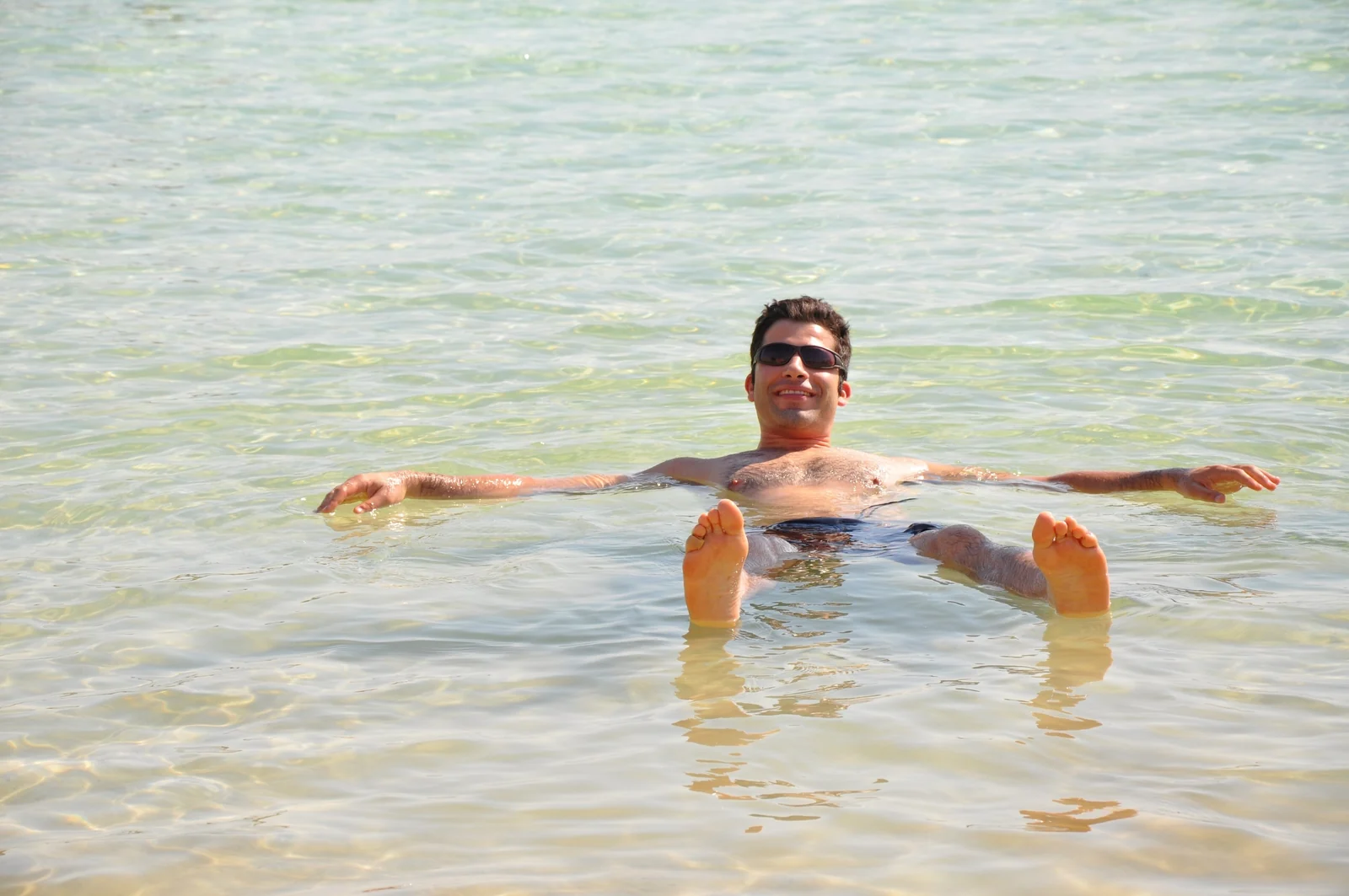
You can enter the sea from public beaches or by buying a day pass at a resort, which usually includes showers, pools and a private shoreline. Prices and conditions differ widely, so compare options before you go.
Floating Safely
- Walk in slowly and sit back into the water; do not swim front crawl or splash.
- Keep your head up and never dunk your face. The water stings badly in the eyes.
- Skip shaving the day before and cover any cuts with waterproof dressings.
- Stay in for a short time, around 15 to 20 minutes at once, then rinse off with fresh water.
- Take water shoes if the shore is rocky, and drink plenty of water, because the heat and salt are drying.
The mineral mud sold along the shore is a popular treat, though it is entertainment more than medicine. Apply it, wait until it dries, then wash it off in the sea.
Wadi Mujib: Canyon Adventure Near the Dead Sea
If floating alone feels too gentle, Wadi Mujib offers a wet, scrambling alternative. The canyon is part of a nature reserve managed by the Royal Society for the Conservation of Nature, and its water trails mix wading, climbing and short waterfall sections. It lies close to the Dead Sea road, so it works as a morning activity before a soak.
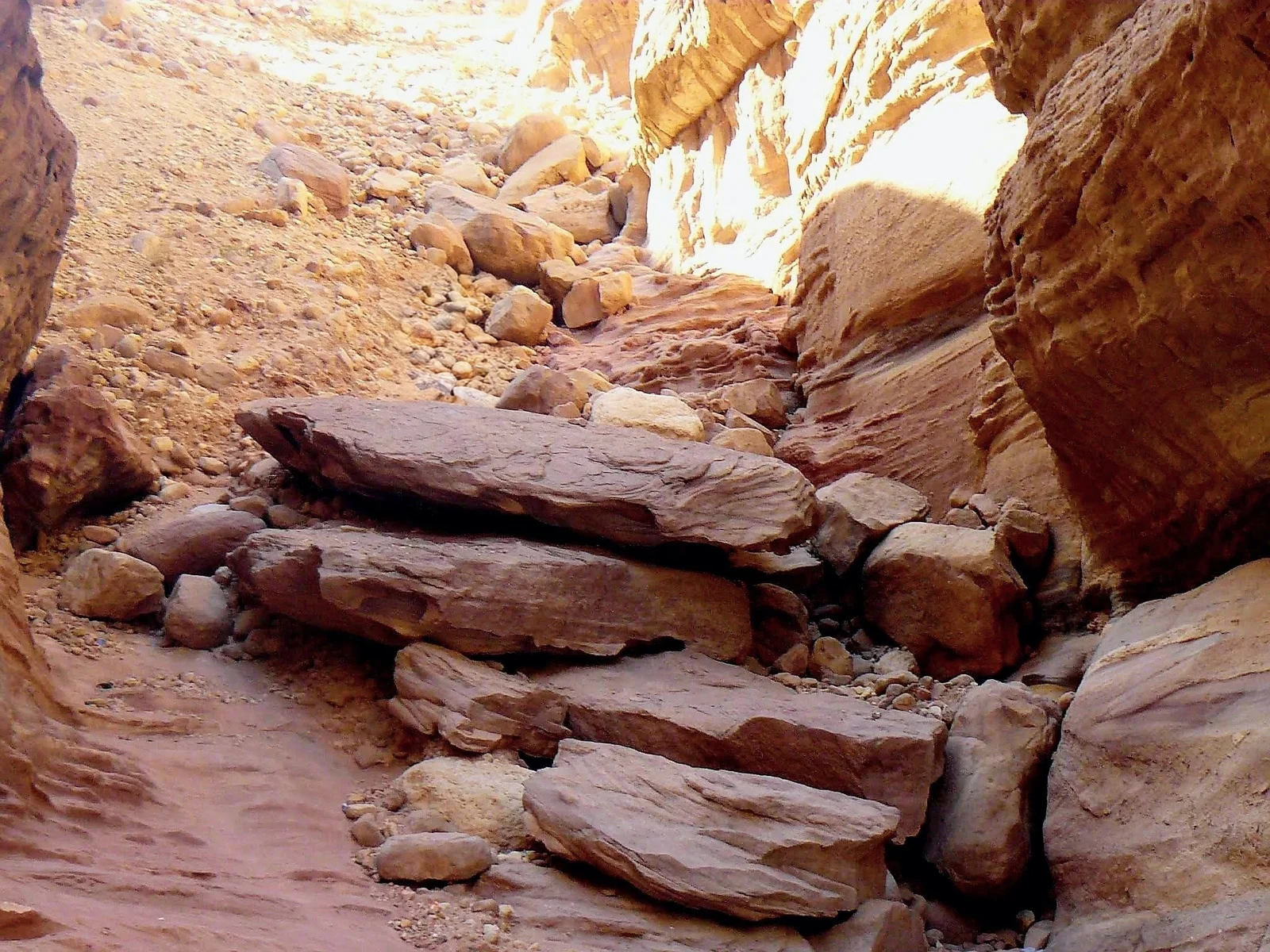
The water trails are seasonal, generally running in the warmer months, and conditions depend on the weather, because flash floods can close them. Always confirm current trail status, fees and any booking rules on the Jordan Tourism Board's Wadi Mujib page or with the reserve itself. Wear clothes you do not mind soaking, and bring a dry change and a waterproof bag for your phone.
Day Trips from Amman at a Glance
| Trip | Distance from Amman | Best for | Time to allow |
|---|---|---|---|
| Jerash | About an hour north | Roman ruins, Hadrian's Arch, Oval Plaza | Half day |
| Madaba and Mount Nebo | About an hour south and southwest | Byzantine mosaics, Moses viewpoint | Half day |
| Dead Sea | About an hour southwest by road | Floating, beaches, resort day passes | Half to full day |
| Wadi Mujib | Roughly 1.5 hours, near the Dead Sea road | Canyon wading in season | Half day |
| Amman city | In town | Citadel, Roman Theater, souks | Half day |
Travel times depend heavily on traffic and your starting district, so treat them as a guide.
A 3-Day Plan from Amman
Day 1: Amman and Jerash
Leave early for Jerash and spend the morning at the ruins. Return to Amman for a late lunch downtown, then climb the Citadel for sunset and walk down to the Roman Theater and the souks.
Day 2: Madaba, Mount Nebo and the Dead Sea
Head south to Madaba for the mosaic map, continue to Mount Nebo for the view, then drop to the Dead Sea for an afternoon float. Return to Amman after sunset, once the heat has eased.
Day 3: Wadi Mujib or a Slow Amman Day
In the warmer months, spend the morning in Wadi Mujib and finish at the Dead Sea. In other seasons, use the day for Amman's museums and cafés, or take a longer trip south to Petra. Our Petra and Wadi Rum guide shows how to extend the route, and if you are building a bigger ancient-history trip, our Egypt itinerary is a natural companion.
Transport, Costs and the Jordan Pass
Getting Around
Private drivers and hired cars are the most flexible option for several sites in a day, especially the Dead Sea and Mount Nebo, which have little reliable public transport. Ride-hailing apps work in Amman and are handy for short city trips. Shared minibuses and local buses serve Jerash and Madaba on a budget, though they are slower and less predictable. Many travelers also book small group tours from Amman, which can cut stress if you are short on time.
If you rent a car, expect heavy city traffic, aggressive lane changes and occasional speed bumps on rural roads. A driver is often worth the money for the Dead Sea descent.
Jordan Pass Basics
The Jordan Pass bundles a tourist visa fee waiver with entry to dozens of sites. According to its official FAQ, the visa waiver applies if you buy the pass before arrival and stay at least three consecutive nights. The pass covers Jerash, the Amman Citadel, Petra and Wadi Rum, and it comes in tiers that differ by the number of days at Petra. Check the official site for the current list of included attractions and prices, since details change and not every site on this itinerary is covered.
Best Time to Visit and Practical Tips
Spring and autumn are the most comfortable seasons for this route. Summer is hot, especially at the Dead Sea and Jerash, so start early and plan indoor breaks. Winter brings cool days and rain in Amman, with the Dead Sea basin staying much warmer than the hills. Wadi Mujib's water trails depend on the weather, so check before you commit to the canyon.
- Dress: modest clothing is appreciated in towns and expected at religious sites, with covered shoulders and knees. Swimwear belongs on the beach or at resorts.
- Weekends: Friday is the main day of rest, so some places close or open late. Check hours first.
- Sun and water: carry a refillable bottle, sunscreen and a hat for every day trip.
- Cash and cards: cards work in hotels and bigger restaurants, but small shops, taxis and some sites prefer cash in Jordanian dinars.
- Ramadan: hours shift and daytime eating is done discreetly; check opening times when you plan your dates.
Day Trips from Amman FAQ
What are the best day trips from Amman?
Jerash, Madaba with Mount Nebo, and the Dead Sea are the classic three. Each takes about an hour each way and fits a half day or full day, so you can base yourself in Amman and see all of them in three days.
How long do you need in Jerash?
Allow about half a day. That gives you time to walk from Hadrian's Arch through the Oval Plaza and cardo to the theaters and the Temple of Artemis, with breaks for shade and water. Early morning is best for avoiding heat and crowds.
Is the Dead Sea safe to swim in?
Yes, if you follow the rules. Enter slowly, keep your face out of the water, avoid shaving beforehand, and limit your time to short sessions. Rinse off with fresh water afterward. The main risks are salt in the eyes and sunburn.
Can you visit Madaba, Mount Nebo and the Dead Sea in one day?
Yes, and many tours do. Start early in Madaba for the mosaic map, go on to Mount Nebo for the view, then finish with a swim and a rinse at the Dead Sea. It is a full but manageable day if you have a driver.
Is the Jordan Pass worth it for Amman day trips?
It can be, mainly if you also visit Petra and stay at least three consecutive nights, which triggers the visa fee waiver. It covers Jerash and the Amman Citadel. Add up what you will really visit, and check the official site for current details.
Can you do these trips without a car?
Partly. Jerash and Madaba are reachable by local minibus or bus, though slowly. The Dead Sea and Mount Nebo are harder without a car, so a private driver, taxi or small group tour is usually the easier choice for those stops.
When is the best time to visit Jerash and the Dead Sea?
Spring and autumn offer the most comfortable temperatures for both. Summer is hot, so go early and rest in shade or water. Winter can be rainy in Amman but is pleasant at the Dead Sea, which stays warmer than the hills.