


Montreal and Quebec City sit about three hours apart on the St. Lawrence River, and together they make the best short introduction to French-speaking Canada. Montreal is the big, restless island city with cobbled Old Montreal, a mountain park in the middle and some of the best cheap food in North America. Quebec City is smaller, older and more theatrical, with a walled Old Town that UNESCO listed in 1985.
This Montreal and Quebec City travel guide covers the sights worth your time in each, what to eat (bagels, poutine, smoked meat), how to get between the two, a day trip to Montmorency Falls and when to go, from autumn color to the winter carnival. Four to six days is a comfortable plan. For the rest of the country, start with our Canada travel guides.
Old Montreal: Cobblestones and Notre-Dame Basilica
Old Montreal is where the city began, and it is the obvious first stop. The streets near the river are lined with 18th- and 19th-century stone buildings, and Place Jacques-Cartier slopes down toward the Old Port with buskers, flower sellers and café terraces in warm weather. It is touristy, and you will not have it to yourself, but it is also genuinely handsome. Walk it early in the morning or in the evening and it feels like another place.
The headline building is Notre-Dame Basilica on Place d'Armes. The cornerstone was laid in 1824 and the church was dedicated in 1829. The two towers were finished later, in 1841 and 1843. The exterior is solid Gothic Revival, but the interior is the surprise: deep blue vaults scattered with gold stars, carved wood and a huge altarpiece. Pope John Paul II raised it to minor basilica status in 1982.
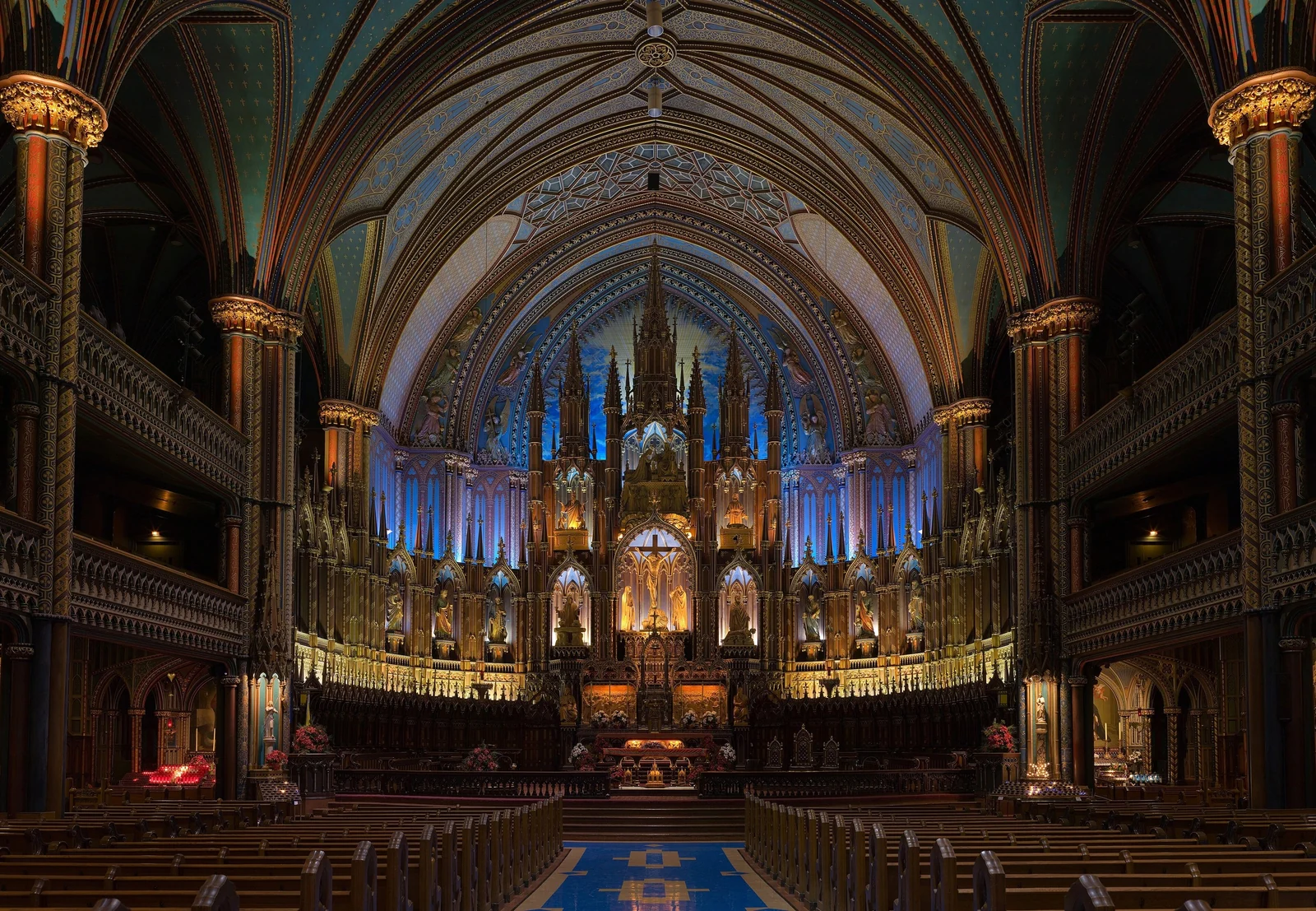
Entry is ticketed and the basilica is also used for services and concerts, so check hours and any evening light show on the basilica's official site. Allow 45 minutes to an hour. Afterward, drift down to the Old Port, or duck into one of the small streets of galleries, restaurants and wine bars. If it is raining or freezing, remember that downtown Montreal has a large underground pedestrian network linking metro stations, malls and offices.
Mount Royal and the Plateau
The mountain that gives Montreal its name is a green hill rising to about 233 meters in the middle of the island. Mount Royal Park was inaugurated in 1876 and designed by Frederick Law Olmsted, who also co-designed Central Park in New York. It is where locals run, picnic, ski cross-country and, on summer Sundays, gather for drumming and dancing.
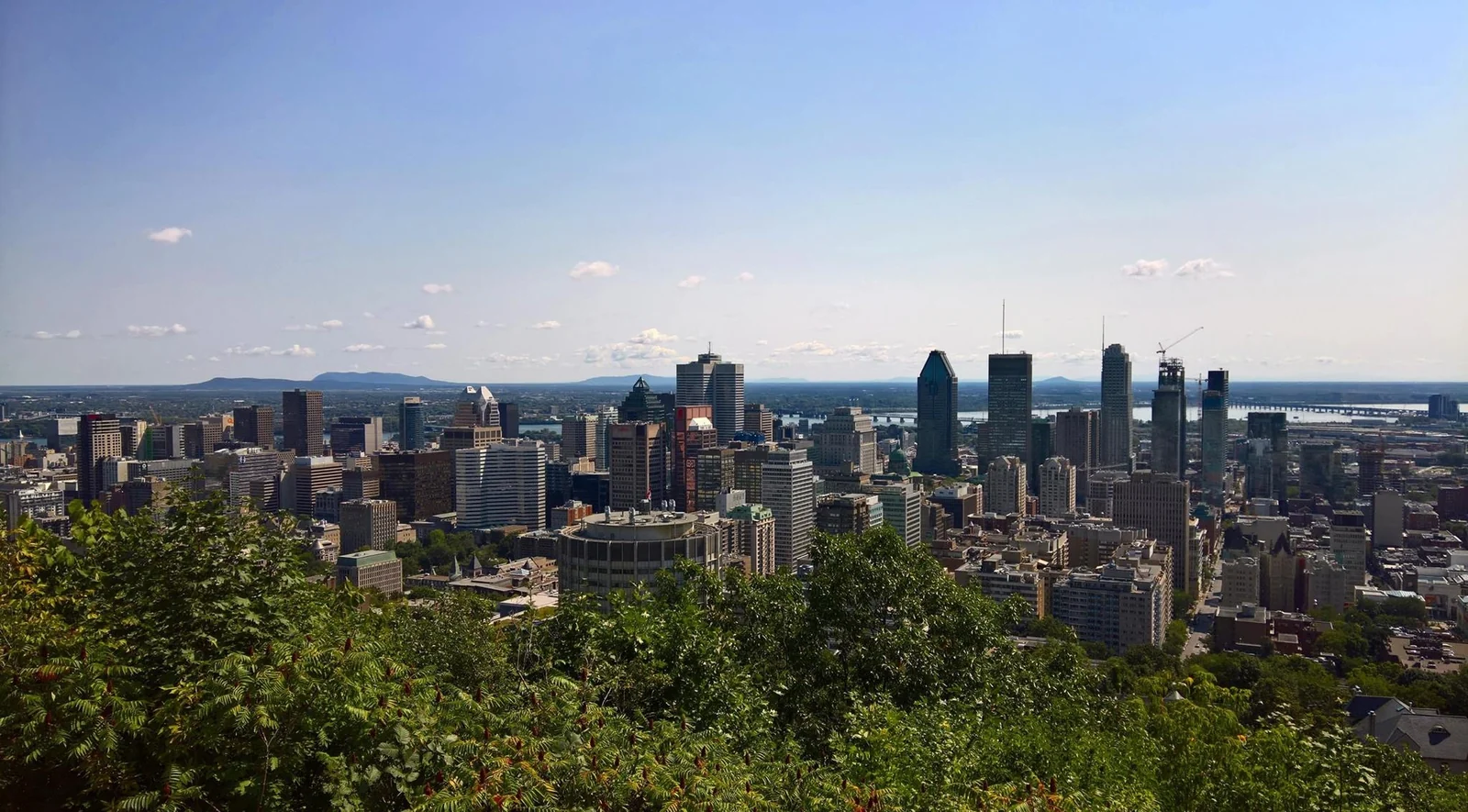
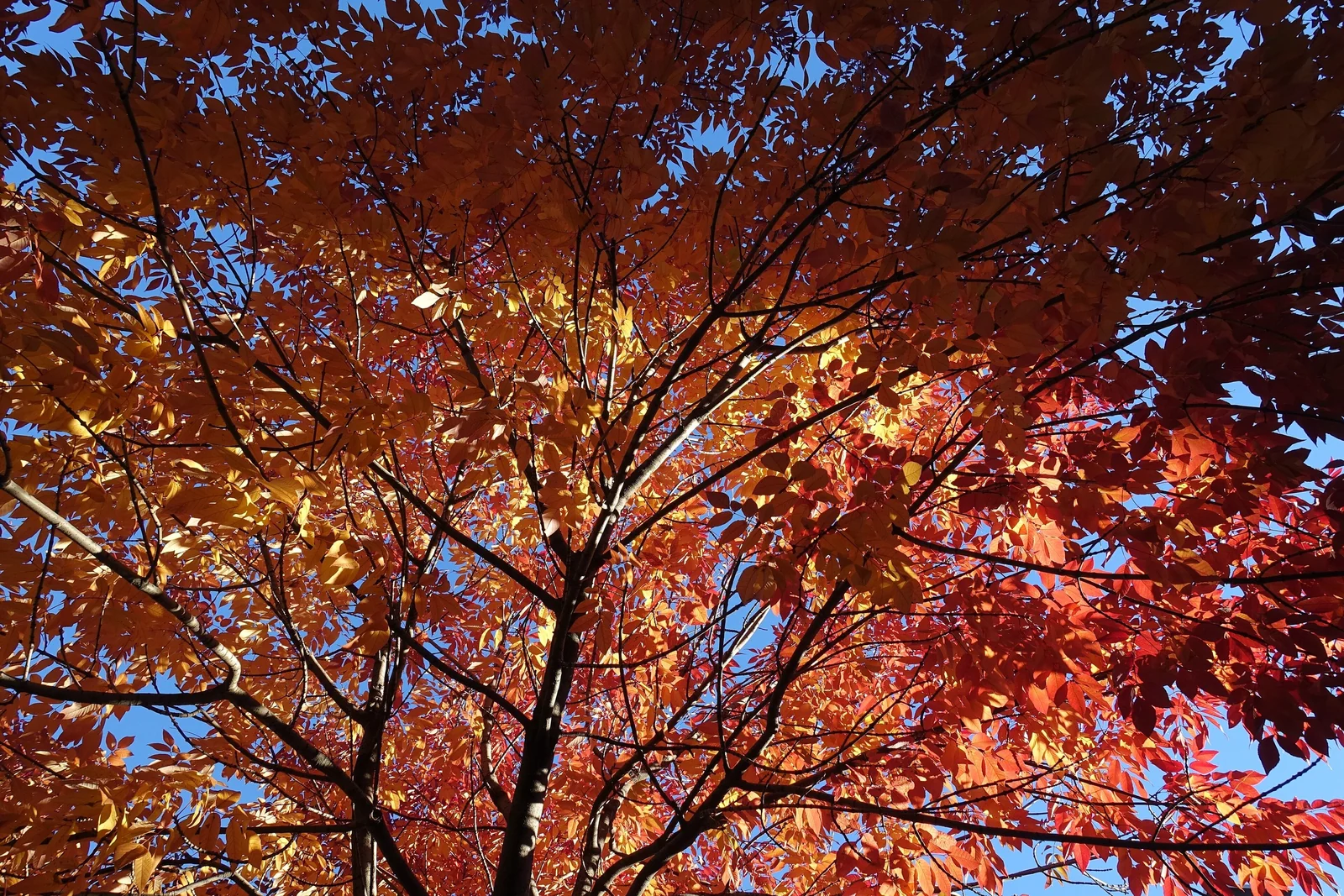
The classic stop is the Kondiaronk Lookout, a semicircular terrace beside the chalet with the downtown skyline and the St. Lawrence beyond. Most visitors walk up from the base on stairs and paths, which takes roughly 20 to 30 minutes at an easy pace, or use public transit to get close. The illuminated cross on the summit dates from 1924. Come at sunset in summer or in October, when the slopes turn orange and red.
Walking the Plateau
Mount Royal's eastern flank leads into the Plateau Mont-Royal, the neighborhood that most people mean when they say Montreal feels livable. Look for the outdoor wrought-iron staircases that climb the fronts of row houses, the big murals, independent shops on Avenue Mont-Royal and cafés along Rue Saint-Denis and Boulevard Saint-Laurent. Plan an unhurried afternoon here rather than a checklist. The Plateau is for wandering, shopping for something you did not plan to buy and stopping every few blocks to eat.
What to Eat in Montreal: Bagels, Smoked Meat and Poutine
Montreal's food scene is serious, and much of it is cheap. Three things to try, none of them fancy.
- Montreal bagels: smaller and denser than the New York kind, with a larger hole, a touch of sweetness from honey in the boiling water, and a crust from a wood-fired oven. Two bakeries, St-Viateur and Fairmount, are the famous names. Buy a bag warm and eat one on the sidewalk.
- Smoked meat: the city's Jewish delis are known for brisket cured with spices and sliced thick on rye bread with mustard. Expect a line at the best-known counters and eat what the person in front of you orders.
- Poutine: fries topped with fresh cheese curds and hot gravy. It is generally traced to rural Quebec in the 1950s, though the exact origin is argued over. The curds should squeak. Many places now offer fancy versions, but a plain one at a diner is the right place to start.
Beyond those, Montreal has excellent bakeries, markets such as Jean-Talon, and bistros that treat French technique casually. Tipping is customary at sit-down restaurants, so budget for it. Menus are French first, with English widely understood in the places visitors go; a few words of French, starting with bonjour, always lands well.
Quebec City Old Town: UNESCO Streets and Fortifications
Quebec City is the capital of the province, with roots in the French settlement Samuel de Champlain founded in 1608. The Historic District of Old Québec was inscribed by UNESCO in 1985, and Parks Canada describes it as the most complete fortified colonial town north of Mexico. You see why as soon as you climb to the walls.
The Old Town has two levels. Upper Town sits on Cap Diamant with the ramparts, the Citadelle and Place d'Armes. Lower Town runs along the river, with Place Royale and the narrow Rue du Petit-Champlain, a pedestrian shopping street reached by stairs or by the short funicular. The whole district is compact enough to cover on foot in a day, though two days feel better.
Chateau Frontenac and Dufferin Terrace
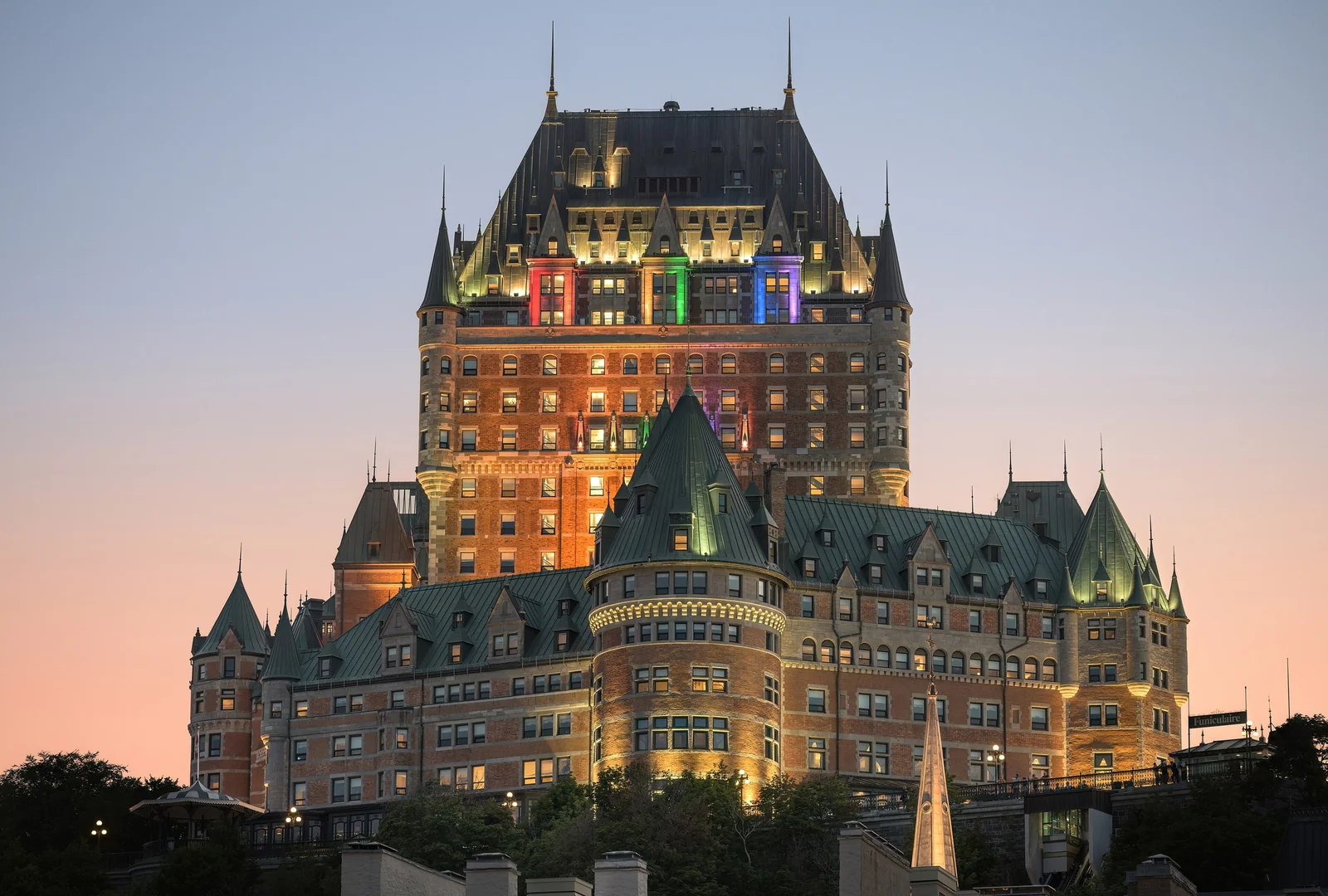
The skyline icon is the Chateau Frontenac, a copper-roofed hotel in the Château style that opened in 1893. It was designed by the American architect Bruce Price, and Roosevelt, Churchill and Canadian prime minister Mackenzie King held a wartime strategy conference there in 1943. You do not need to stay to enjoy it. The wide Dufferin Terrace along its river side is free, with long views over the St. Lawrence, and it is the best place for an evening walk.
Walls, Citadelle and the Plains of Abraham
Walk the fortifications for the best sense of how the city was defended, then see the Citadelle, an active military site, and the nearby Plains of Abraham, the park where the British defeated the French in 1759. In the lower town, Place Royale is the old merchant square, and Notre-Dame-des-Victoires church faces it. The streets between are full of galleries, crêperies and small hotels in old stone buildings. Learn more about the district on the Quebec City tourism site and the UNESCO World Heritage listing.
Day Trip: Montmorency Falls
The easiest escape from Quebec City is Montmorency Falls, about 12 kilometers from the Old Town. The water drops 83 meters, roughly 30 meters higher than Niagara, though far narrower. A cable car runs between the base and the top, and staircases and a suspension bridge across the crest give you different views, so you can make it a short stop or a two-hour outing. Check seasonal operating details on the park's official page before you go.
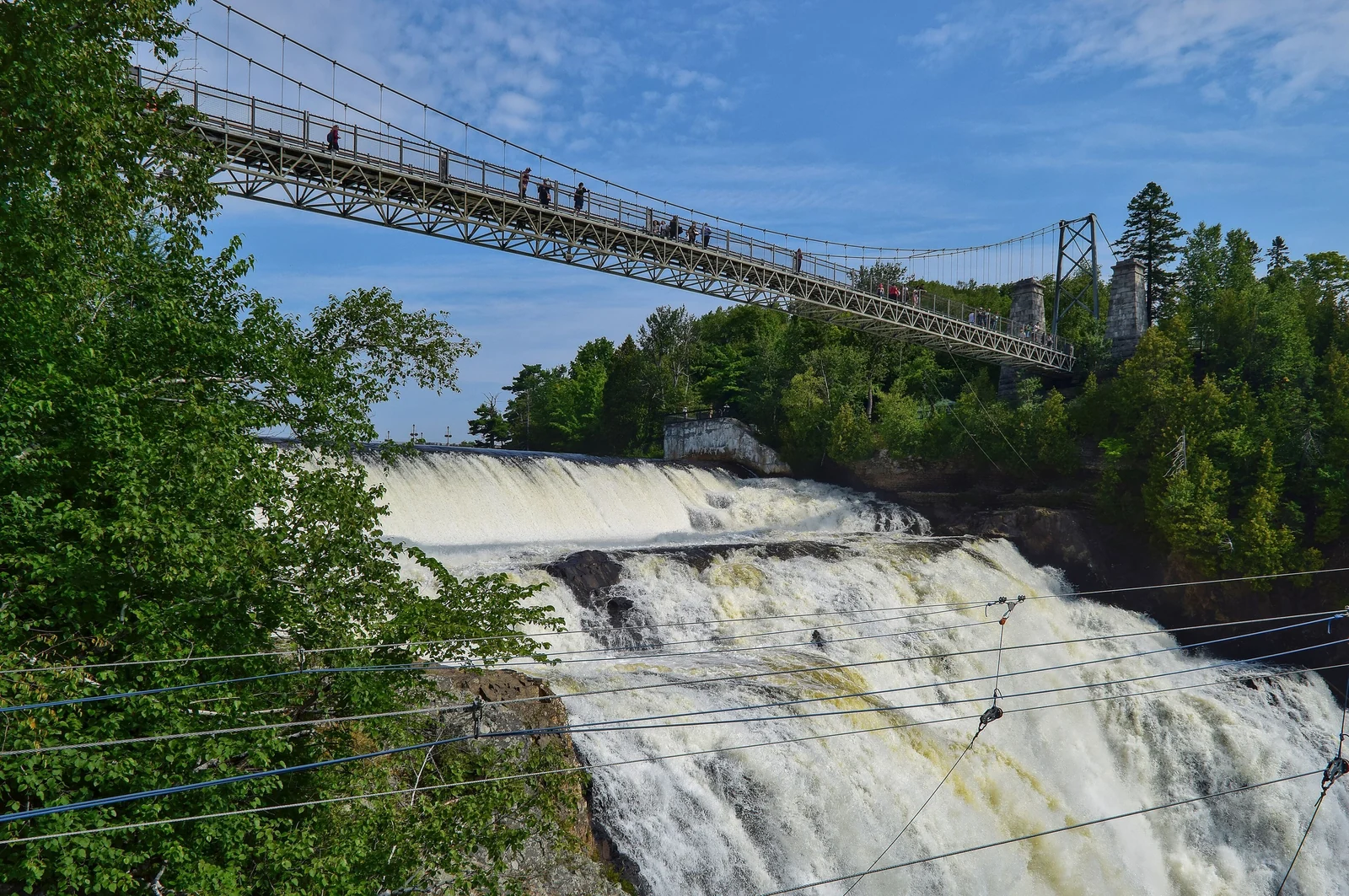
City buses and tour operators both serve the falls, and driving takes well under half an hour without traffic. In winter, the spray freezes into a huge ice cone at the base. If you have a car and more time, the Île d'Orléans, a rural island in the river known for farms and orchards, is another half-day option, though it is easier with your own wheels.
Montreal to Quebec City: Train, Bus or Car
The distance is roughly 250 kilometers, and all the options take around three hours. Pick based on your luggage and your plans.
| Option | Typical time | Best for | Notes |
|---|---|---|---|
| Train (VIA Rail) | About 3 hours | Relaxed arrival downtown | Montreal Central Station to Gare du Palais in Quebec City; some trains stop at Sainte-Foy |
| Intercity bus | About 3 to 3.5 hours | Budget and frequent departures | Bus terminal sits next to Gare du Palais; check carriers and schedules |
| Car | About 2.5 to 3 hours | Day trips and Île d'Orléans | Parking in both Old Towns is limited and costly |
For a city-to-city trip, the train is the most pleasant: you skip the highway, arrive in the center and get a table and outlets. Book ahead for holidays and carnival weekends. You do not need a car in either city. If you plan to explore farther, rent one in Quebec City only. For connections and fares, use VIA Rail's official site.
Best Time to Visit: Autumn Colors and Winter Carnival
| Season | What to expect | Good for |
|---|---|---|
| Late spring | Mild, green and still quiet | Walking, terraces, lower prices |
| Summer | Warm and often humid; festivals and outdoor dining | Mount Royal, Old Port, patios |
| Autumn (late September to mid-October) | Cool, bright and colorful on Mount Royal and in the countryside | Photography, hikes, comfortable sightseeing |
| Winter (late January to mid-February) | Very cold and snowy, with the Quebec Winter Carnival | Snow, ice sculpture, cozy restaurants |
Autumn is the pick for most visitors, usually peaking around the first half of October, though exact timing shifts each year. The leaves color the slopes of Mount Royal and the hills outside both cities, and the weather suits long walks. For a bigger leaf-peeping trip, add a day in the Laurentians or Charlevoix.
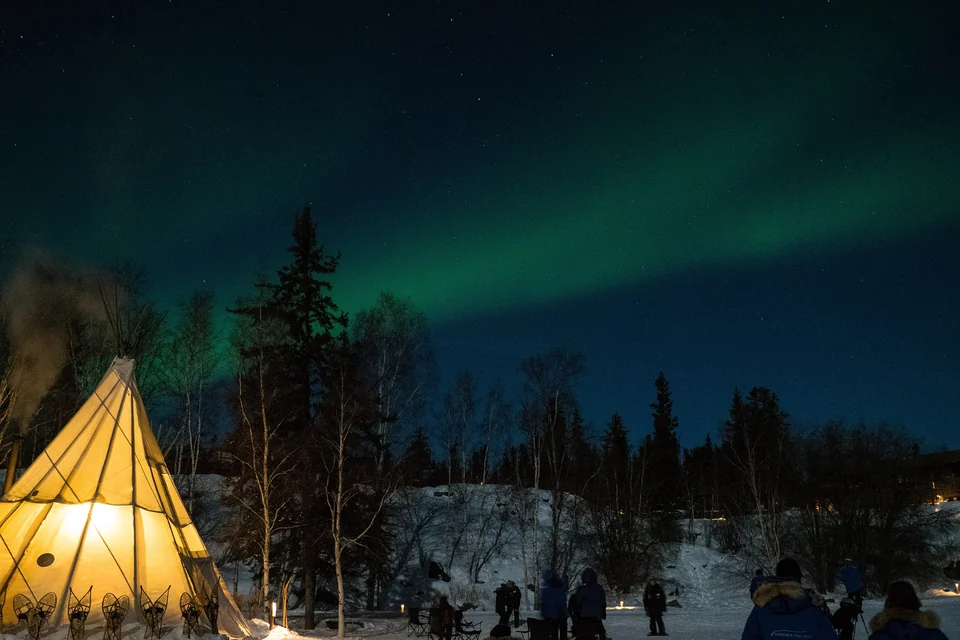
Winter is not for everyone, but Quebec Winter Carnival is the biggest reason to go. It runs from late January to mid-February, centered on an ice palace and a mascot snowman named Bonhomme, with parades, ice sculpture and outdoor events. Dress in layers, bring real boots and plan indoor breaks. Check the official carnival site for dates and programs, which change each year. If cold and northern lights are your thing, our guide to aurora hunting in Canada's Arctic goes much farther north.
Where to Stay and Practical Tips
- Old Montreal: atmospheric and walkable to the basilica and port, but noisier and pricier.
- Downtown Montreal: good transit links, larger hotels and the underground city.
- The Plateau: local feel, small guesthouses and many cafés, a little farther from the major sights.
- Old Quebec (Upper Town): convenient, historic and busy by day, quiet at night.
- Saint-Roch, Quebec City: a revived area just outside the walls with newer restaurants and cheaper rooms.
Some practical notes. French is the official language of Quebec, and signs are French first, but most people in tourism speak English. Bring a warm jacket even in shoulder seasons. In Montreal, the metro and buses are enough for visitors, and Quebec City's Old Town is best on foot, with comfortable shoes for steep streets and stairs. The Canadian dollar is the currency, and cards work almost everywhere. For wider planning, see our Canada traveler's guide, and if mountains are next on the list, our Banff and Canadian Rockies guide.
A 5-Day Montreal and Quebec City Itinerary
- Day 1, Montreal: Old Montreal, Notre-Dame Basilica and the Old Port. Evening smoked meat or a bistro dinner.
- Day 2, Montreal: Mount Royal in the morning, then the Plateau, bagels and a long dinner.
- Day 3, travel: morning train to Quebec City, a first walk along Dufferin Terrace and dinner in the Old Town.
- Day 4, Quebec City: ramparts, Citadelle, Plains of Abraham, Petit Champlain and Lower Town.
- Day 5, Montmorency Falls: the falls and cable car, then a final lunch back in town.
Montreal and Quebec City FAQ
How many days do you need for Montreal and Quebec City?
Four to six days works well. Give Montreal two or three days and Quebec City two, with a half-day for Montmorency Falls. You can see the main sights in a long weekend each, but you will be moving quickly.
Is it better to take the train or bus between them?
The train is more comfortable and arrives near the Old Town. Buses are usually cheaper and frequent, and the terminal is next to the train station. Both take around three hours, so pick by price and schedule.
Do you need to speak French?
No. French is the main language, but staff in hotels, restaurants and attractions generally speak English. Starting a conversation with bonjour is polite and gets a warmer response.
When is the best time to see fall colors?
Late September to mid-October is the usual window, with the peak varying by year and elevation. Mount Royal in Montreal and the hills around Quebec City are good places to see the leaves.
When is the Quebec Winter Carnival?
It is held from late January to mid-February. The exact dates and program change annually, so check the official carnival site before booking flights or hotels, since rooms fill quickly.
Is Quebec City worth visiting?
Yes. The Old Town is a UNESCO World Heritage Site, described by Parks Canada as the most complete fortified colonial town north of Mexico, and it is compact enough to see on foot. It feels very different from Montreal.
What should you eat in Montreal?
Try a wood-fired Montreal bagel, a smoked meat sandwich and poutine. Add pastries, local cheese and a market visit if you have time. Prices at the classics are modest compared with fine dining.