The best day trips from Porto are the Douro Valley for wine and river scenery, Guimarães for medieval history, Braga for churches and a baroque hilltop stairway, and Aveiro for canals and the lagoon. All four are doable in a day without a rental car, and the middle two can be paired if you start early.
This guide ranks them by effort and reward, explains how to get to each by train, bus or car in general terms, and shows which combinations work and which only look good on a map. Porto itself is covered in our Porto travel guide, so here we focus on leaving town.
Porto as a Base for Day Trips
Porto is one of the easiest bases in Portugal, because the north of the country is compact and the railway fans out from the city. Regional lines run east into the Douro Valley, north to Braga and Guimarães, and south to Aveiro and Coimbra. Most start from São Bento or Campanhã, and the national operator, Comboios de Portugal (CP), publishes the timetables for all of them.
The honest limitation is frequency. On some lines trains run hourly, on others only every couple of hours, so a missed connection can cost you a chunk of the day. Check the return times before you leave in the morning, not after dinner. If you are arriving from the capital, our guide to Lisbon to Porto by train, bus or car explains the stations you will meet first.
Day Trips From Porto at a Glance
| Destination | Best for | Getting there | Time to allow |
|---|---|---|---|
| Douro Valley | Vineyards, river views, wine tasting | Regional train, river cruise, organized tour or car | Full day |
| Guimarães | Medieval castle, old town, history | Train, bus or car | Half to full day |
| Braga | Churches, Bom Jesus do Monte, food | Train, bus or car | Half to full day |
| Aveiro | Canals, boats, lagoon, sweets | Frequent regional trains | Half day |
| Amarante | Riverside town, relaxed pace | Car or bus is easiest | Half day |
| Coimbra | University, old library, hillside city | Intercity train | Full day, or a stop on the way south |
Travel times in general terms: Aveiro, Braga and Guimarães are each roughly an hour to an hour and a half from Porto, the Douro towns of Régua and Pinhão are around two hours or a little more by train, and Coimbra sits a little over an hour away on the fast services. Treat all of that as a range and confirm it on the operator's site.
Douro Valley Day Trip From Porto
If you only do one excursion, make it this one. The Alto Douro wine region is a UNESCO World Heritage cultural landscape, where terraces cut into steep slopes have produced wine for roughly two thousand years. The region's port wine has been regulated since 1756, which makes it one of the oldest formally defined wine regions in the world.
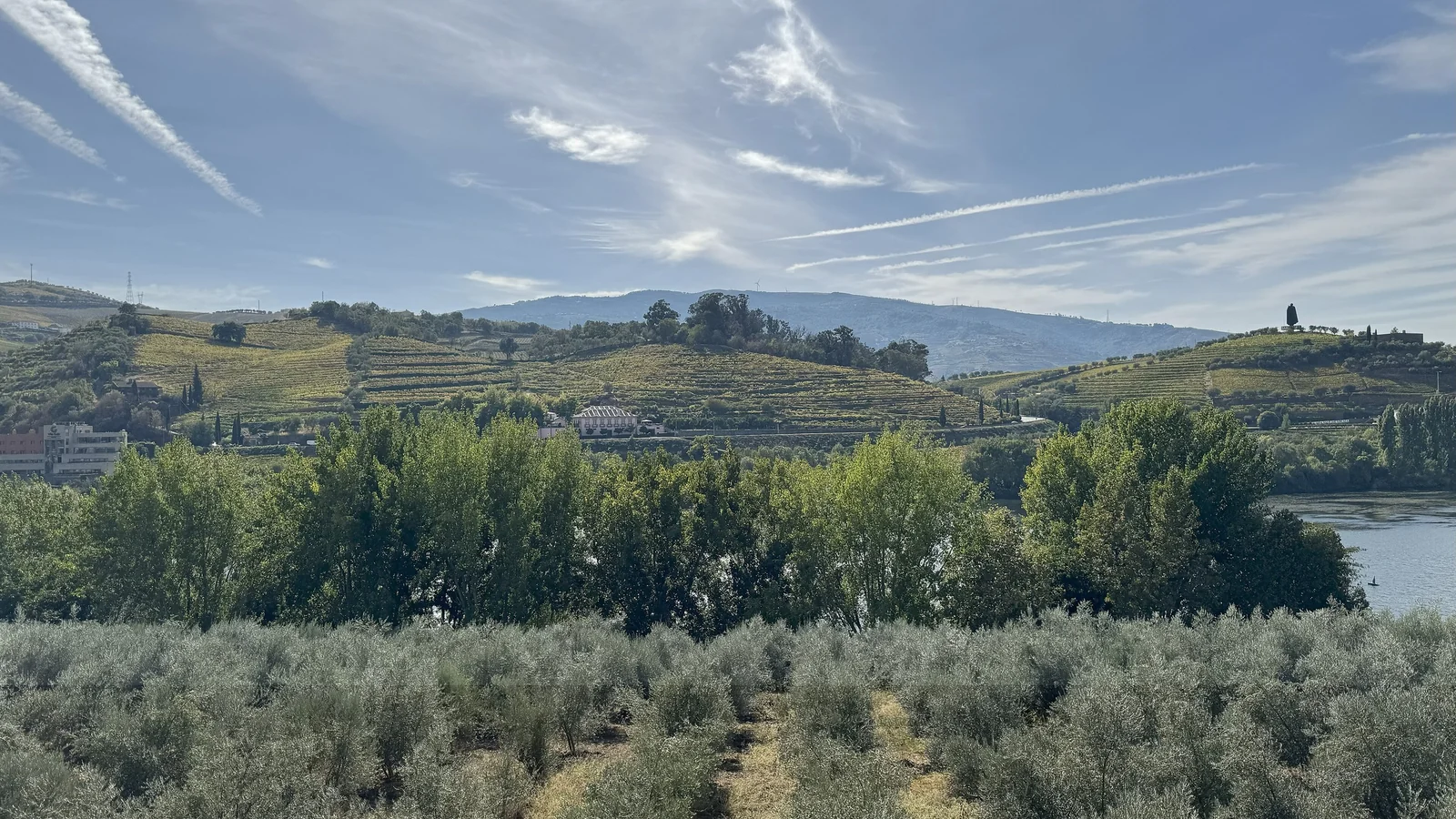
The valley is long, and that is the first thing to plan around. Two names matter for a day trip. Peso da Régua is the commercial hub and the nearer of the two. Pinhão sits deeper in the valley, in the heart of the Cima Corgo sub-region, and is the better base for estates and viewpoints. You will not see the whole valley in a day. Pick a stretch and enjoy it.
By train
The Douro line leaves from São Bento and follows the river for long stretches east of Régua, which is why many travelers treat the ride itself as the attraction. Services run to Régua and on to Pinhão and beyond, but not every train goes the full way, so check that yours continues to Pinhão. Expect a journey of about two hours or a little more each way. Sit on the river side and keep your camera ready.
The train is the cheapest way to see the scenery, but it leaves you without transport once you get off. Pinhão is small enough to walk, and some estates are reachable on foot or by taxi, though you need to book a tasting ahead. Without a booking, many estates simply will not open the door.
By river cruise
Cruises operate on the Douro, from short river trips near Porto to longer excursions into the valley. The usual day-trip format combines a transfer by road or rail with a boat section, so you travel one way through the landscape and return another. It suits travelers who want the view without driving or planning, at the cost of a fixed schedule.
By car or organized tour
A car gives you the most freedom, since the best estates and viewpoints sit well above the river on winding roads. If you plan to taste wine, though, do not be the driver. A small-group tour with a driver solves that, and it is the simplest way to combine two estates and a lunch. Pick a tour that states exactly which stops it includes and how many hours you spend at each.
What to expect: the harvest season, usually in early autumn, is lively and busy, and summer can be hot in the valley. Spring and autumn are generally the most comfortable for walking between vines. Wine tasting is the point, so eat something solid before you start.
Guimarães Day Trip From Porto
Guimarães is often called the birthplace of Portugal, since the first king, Afonso Henriques, is traditionally linked with the town and its castle. The historic center is a UNESCO World Heritage site, listed in 2001, and its compact medieval lanes explain why. It is a manageable town, and you can see the main sights on foot.

Start at the castle and the nearby Palace of the Dukes of Bragança, then wander down to the old squares, which have cafés and arcaded houses. Allow time to walk with no plan, because the lanes are the highlight. There is also a cable car up to the hill of Penha for views over the town and surrounding hills, if you have energy and good weather.
Getting there is simple. Regional trains run from Porto, buses are another option, and drivers can reach it in about an hour on the motorway. The train is the easiest choice if you want to leave your car behind. Guimarães pairs well with Braga, since the two towns lie close together in the Minho region.
Braga Day Trip From Porto
Braga is one of Portugal's oldest cities and a religious center, with a cathedral, many churches and a large student population. It feels less polished for tourists than Porto, which is part of the appeal. The main reason to go is Bom Jesus do Monte, a pilgrimage sanctuary on a hillside just outside the center, which UNESCO inscribed in 2019.
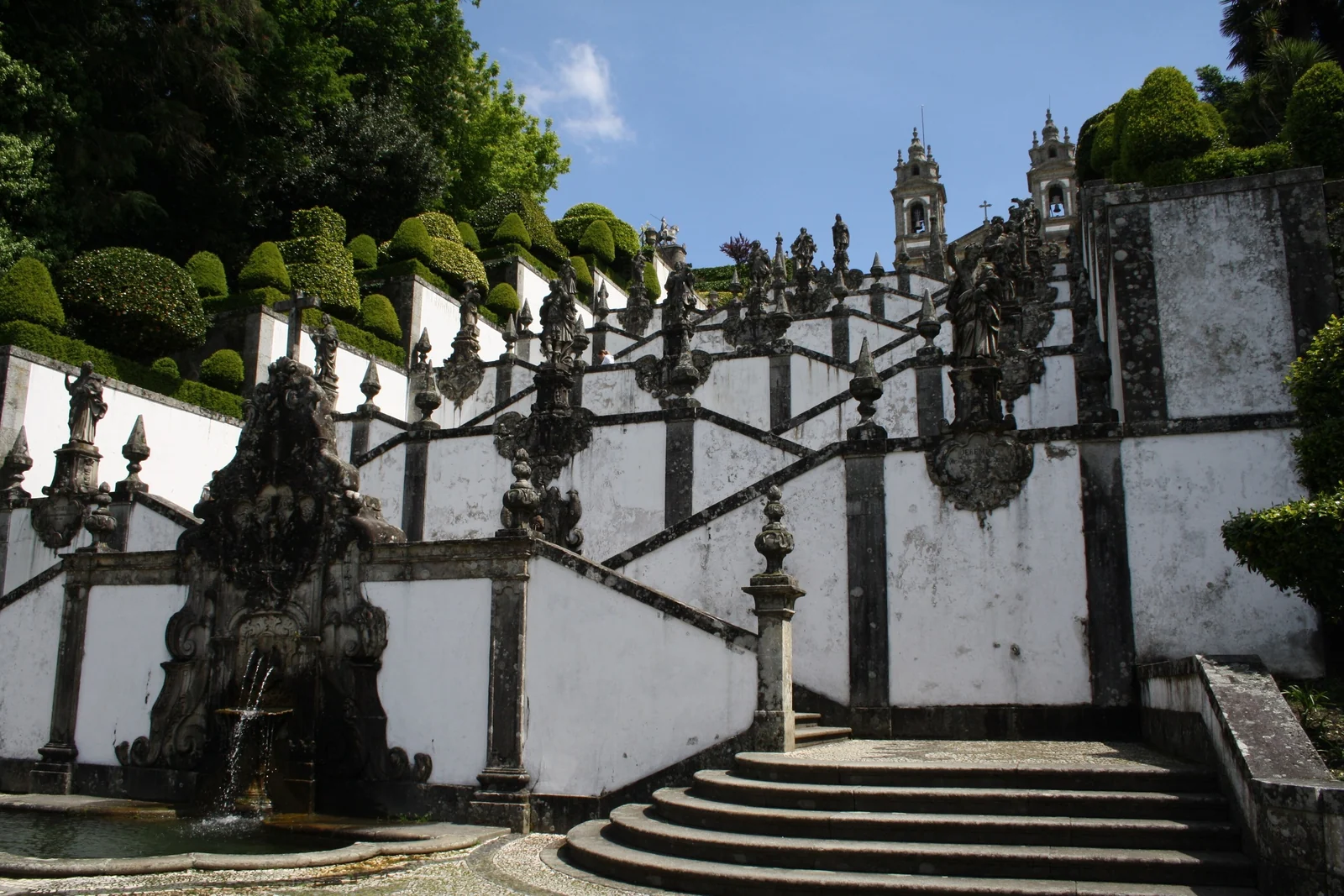
The sanctuary is known for its monumental baroque stairway, which climbs the slope in zigzags past chapels and fountains. You can climb the steps, which is the traditional approach, or take the historic funicular and walk down. Either way, the setting is as impressive as the architecture. Wear shoes with grip, since the stone can be slippery after rain.
The center of Braga is easy to cover on foot in an afternoon: the cathedral, the pedestrian streets, cafés and plazas. Trains from Porto take roughly an hour to an hour and a half depending on the service, and buses and driving are also easy. Braga makes a good second stop after Guimarães, since the two towns sit close together.
Aveiro Day Trip From Porto
Aveiro is the easiest of the lot. It sits on the main northern railway line, so regional trains link it with Porto often, and you can be walking the canals within about an hour. It is smaller than the others, which makes it the best choice when you want a relaxed half day.
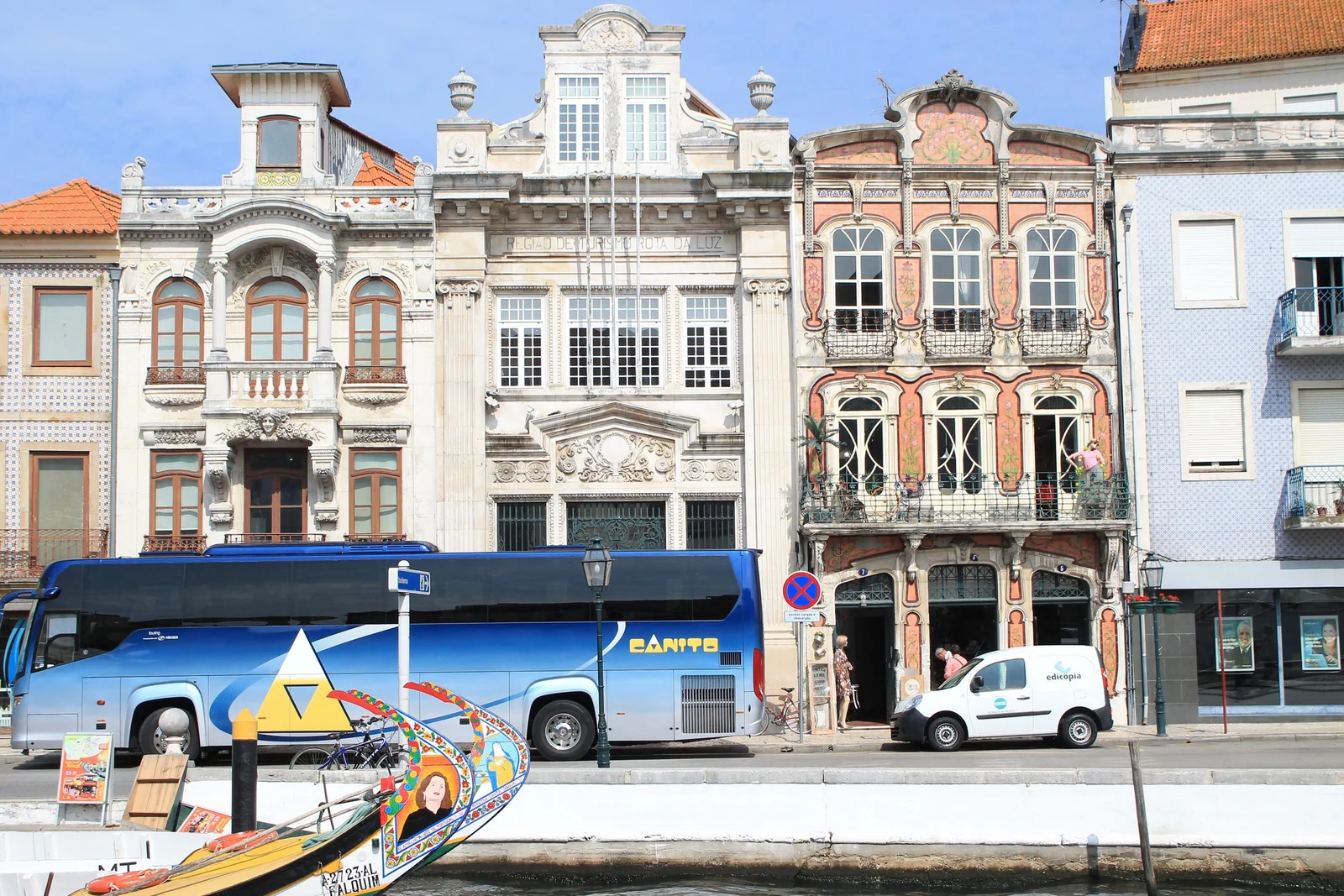
The town is crossed by canals and known for the brightly painted boats called moliceiros, which were once used to gather seaweed from the lagoon and now carry visitors. Take a short boat ride, then walk the old center, with its Art Nouveau houses and bridges. Try the local sweet called ovos moles, a delicate egg-yolk filling in a thin wafer shell.
If you have more time, take a bus or taxi to the beach strip across the lagoon, where striped wooden houses line the sand at Costa Nova. Still deciding how to split your trip between the two big cities? Our Lisbon or Porto comparison helps.
Amarante and Coimbra: Two More Options
Amarante
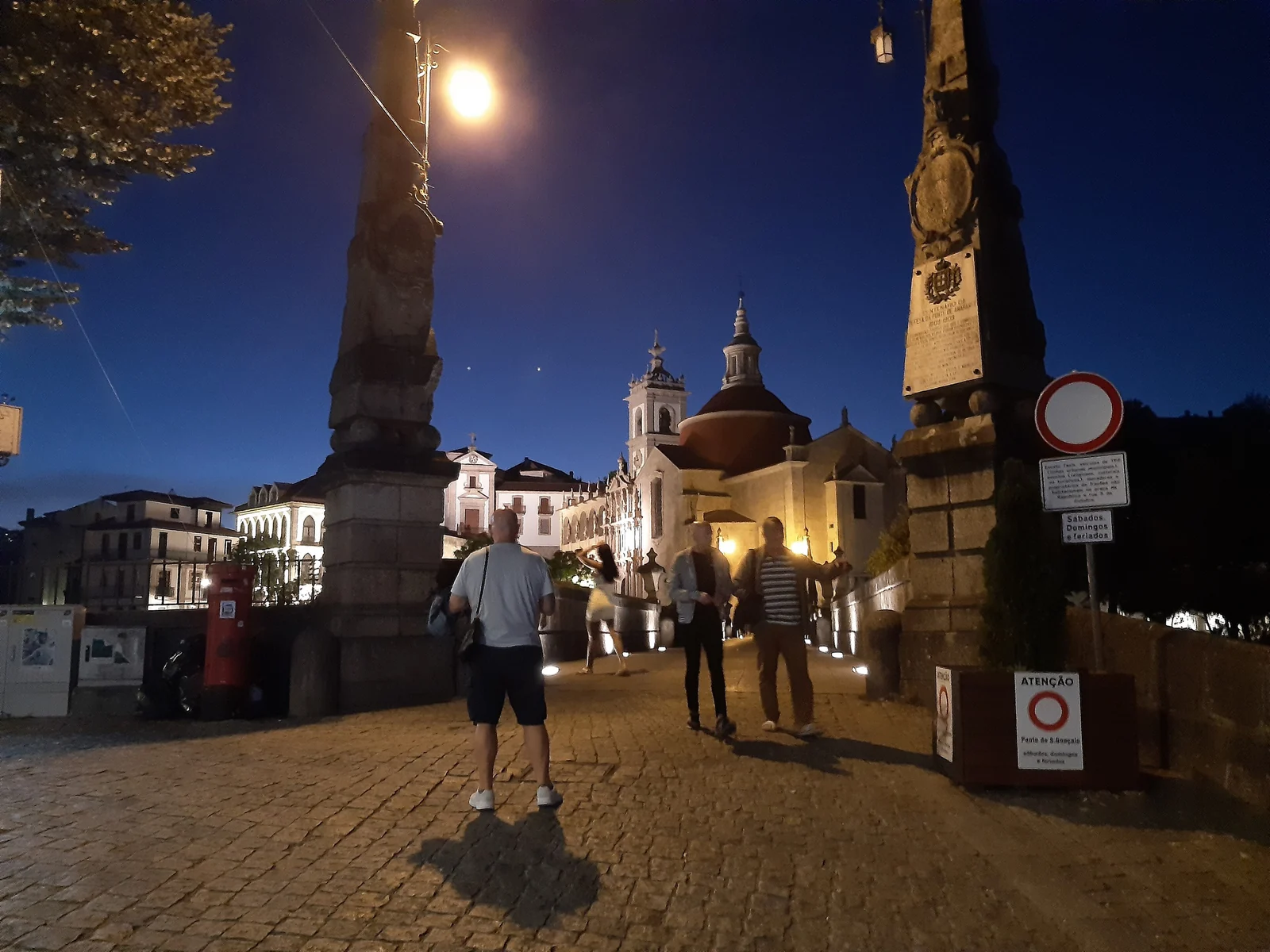
Amarante is a small town on the Tâmega River, built around the bridge of São Gonçalo and the church and monastery beside it. It is the slow, quiet choice. You walk, you sit by the river, and you eat well. It makes more sense with a car or a bus, and works nicely as an add-on to the Douro if you are driving.
Coimbra
Coimbra is the stretch. It is a university city on a hill above the Mondego River, and the old university and baroque library are the draw. It is reachable from Porto in a little over an hour on the fast services, so a day trip works, but you will spend much of your time moving. It makes more sense as a stop when you are traveling on to Lisbon, as we explain in the Lisbon to Porto guide.
How to Get Around: Train, Bus or Car
In general terms, the train is the best answer for Aveiro, Braga and Guimarães, since you skip traffic and parking. Buses are a good backup where trains are infrequent. A car makes sense for the Douro estates and for Amarante, or when you want to chain two towns in one day.
- Trains: reliable on the main lines, less frequent on the Douro. Plan the return leg before you set out if the service is sparse.
- Buses: useful for places the rails skip, but timetables and stops vary, so check the operator's site.
- Car: flexible, but old-town parking is limited. Motorways in the north may charge tolls, so ask your rental company how payment works.
- Tours: the practical route for wine tastings, since no one has to drive.
Best Combinations and Who Each Trip Suits
- Guimarães and Braga: the best pair. Both are in the same region, and you get a castle and a pilgrimage hill in one day.
- Aveiro and Coimbra: works on the way between Porto and Lisbon, not as a round trip from Porto.
- Douro on its own: do not add a second destination. The valley takes the whole day.
- Amarante and the Douro: workable by car, with Amarante as a lunch stop on the way.
Who goes where. Wine lovers and landscape photographers should choose the Douro. History fans will like Guimarães. Travelers who enjoy churches, stairs and a busy local city will like Braga. Families and short-on-time visitors will find Aveiro the least demanding, and Amarante suits anyone who wants quiet.
A simple rule: if you have one day, take the Douro. If you have two, add Guimarães and Braga together. If you have three, add Aveiro. For other ideas across the country, browse the Portugal travel guides.
Day Trips From Porto FAQ
What is the best day trip from Porto?
The Douro Valley is the best for most travelers, thanks to its terraced vineyards, river views and wine estates. If you prefer history and a town to walk, Guimarães is the strongest alternative, and Aveiro is the easiest.
Can you visit the Douro Valley from Porto without a car?
Yes. A regional train from São Bento runs along the river to Régua and on to Pinhão, and river cruises and organized tours are also available. Check that your train continues to Pinhão, and book estate tastings in advance.
How far are Guimarães and Braga from Porto?
Both are in the north of Portugal, roughly an hour to an hour and a half from Porto by train or bus, and a bit under that by car on the motorway. Check the current timetable for the exact journey time.
Can I visit Guimarães and Braga in one day?
Yes, and it is the most natural pairing. Start early in Guimarães for the castle and old town, then continue to Braga in the afternoon for Bom Jesus do Monte. Check the last return train to Porto first.
Is Aveiro worth a day trip from Porto?
Yes, especially as a relaxed half day. It has canals, moliceiro boats, Art Nouveau architecture and a sweet specialty, and trains from Porto are frequent. Add the beach strip at Costa Nova if you have extra time.
Is Coimbra a good day trip from Porto?
It works, but it is a long day for a small payoff compared with closer towns. Coimbra is better as a stop when traveling between Porto and Lisbon, where the university and library fit into the journey.
How many days do I need for day trips from Porto?
Three days cover the highlights: one for the Douro Valley, one for Guimarães and Braga, and one for Aveiro or Amarante. With only one spare day, choose the Douro and keep the rest for another visit.