Picking among the Thailand islands comes down to two questions: which coast, and which month. Phuket, Krabi, Koh Phi Phi and Koh Lanta sit on the Andaman Sea in the west and are best from roughly November to April. Koh Samui, Koh Phangan and Koh Tao sit in the Gulf of Thailand in the east and have a longer, more forgiving season.
After that, it is about temperament. Phuket gives you the most choice and the easiest logistics, Krabi gives you the cliffs, Lanta gives you slow evenings, and the Gulf trio gives you resorts, parties and diving. Below is how they compare, who each one suits and how to move between them. If you are still building the wider trip, our Thailand travel guides cover the mainland.
Two Coasts, Two Monsoon Calendars
Thailand has no single beach season. The southwest monsoon brings heavy rain and rough seas to the Andaman coast through the middle of the year, while the Gulf side catches its worst weather later, toward the end of the year. That split is the reason you can often find a good beach somewhere in the country in any month.
| Coast | Islands | Calmest and driest | Wetter, rougher months |
|---|---|---|---|
| Andaman Sea (west) | Phuket, Krabi, Railay, Koh Phi Phi, Koh Lanta | Roughly November to April | Roughly May to October, with heavy swells and rain |
| Gulf of Thailand (east) | Koh Samui, Koh Phangan, Koh Tao | Roughly January to August, driest in the early months | Roughly October to December |
Treat the months as a guide, not a guarantee. Rain can arrive outside its season and the shoulder months can be lovely, so check the forecast from the Thai Meteorological Department before you commit to ferries. On the Andaman side, many smaller boat operations and national park sites reduce service or close for part of the wet season, so a rainy-month trip needs a flexible plan.
Phuket: The Easy All-Rounder
Phuket is Thailand's largest island and the best connected, with an international airport and bridge access to the mainland. That makes it the default first stop, and the reason it never feels remote. It is also several different places at once, so where you sleep matters more than anything else.
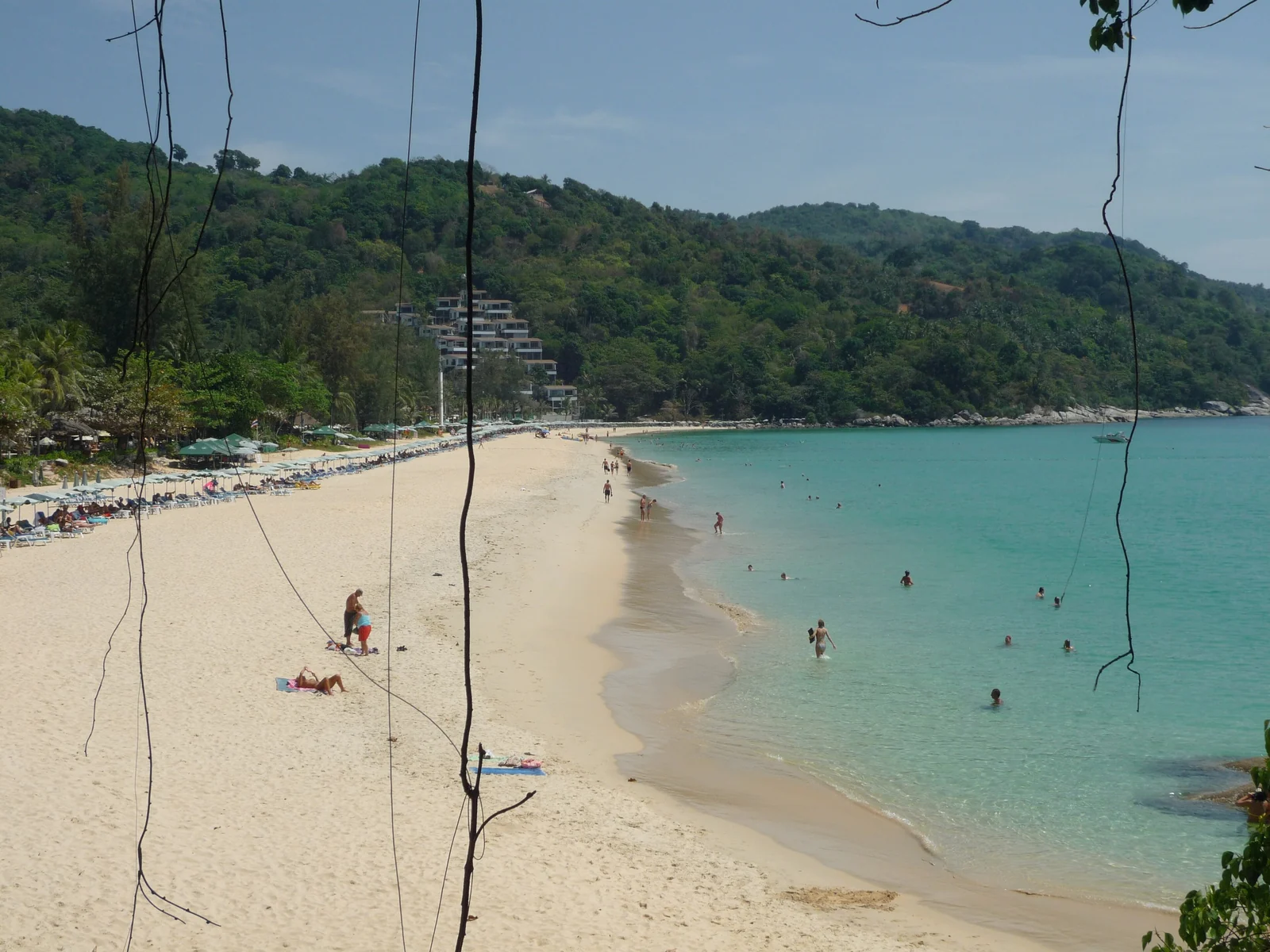
- Patong: the loud one. Big nightlife, big crowds, a long beach and every service you could want.
- Kata and Karon: broad west-coast beaches with a more relaxed feel, popular with families and first-timers.
- Kamala, Surin and Bang Tao: quieter beach strips further north, with upscale resorts.
- Phuket Town: not a beach base, but the old Sino-Portuguese shophouses, cafes and food stalls are worth an afternoon.
Phuket suits first-time visitors, families, travelers who want choice, and anyone who wants to use the island as a launch pad for boat trips to Phang Nga Bay and Phi Phi. Its weakness is traffic and development; some beaches feel more like a resort city than a tropical island. Go in the dry months and expect the west-coast surf to be gentle.
Krabi, Railay and Koh Phi Phi: Limestone Country
Krabi is the most dramatic landscape of the lot. Tall limestone karsts rise straight out of the sea, and the beaches below them are backed by jungle. The province includes the mainland resort town of Ao Nang, the Railay peninsula and, offshore, the Phi Phi islands, though Phi Phi is often visited from Phuket too.
Railay: Cliffs and Long-Tail Boats
Railay is a peninsula cut off from the mainland by cliffs, so you reach it by long-tail boat from Ao Nang or Krabi Town. There are no through roads, which is the entire appeal. It is a well-known rock-climbing spot, and the beaches are good for swimming, kayaking and doing very little.
Koh Phi Phi: Spectacular but Busy
Phi Phi Don is the inhabited island, with a lively sand-spit village and a strong party scene after dark. Uninhabited Phi Phi Leh holds Maya Bay, the beach made famous by a film. It was closed for several years to let the reef recover and reopened to visitors in 2022 under strict limits, including restrictions on boats and swimming. Rules change, so check with the national park or your tour operator before you plan around it.
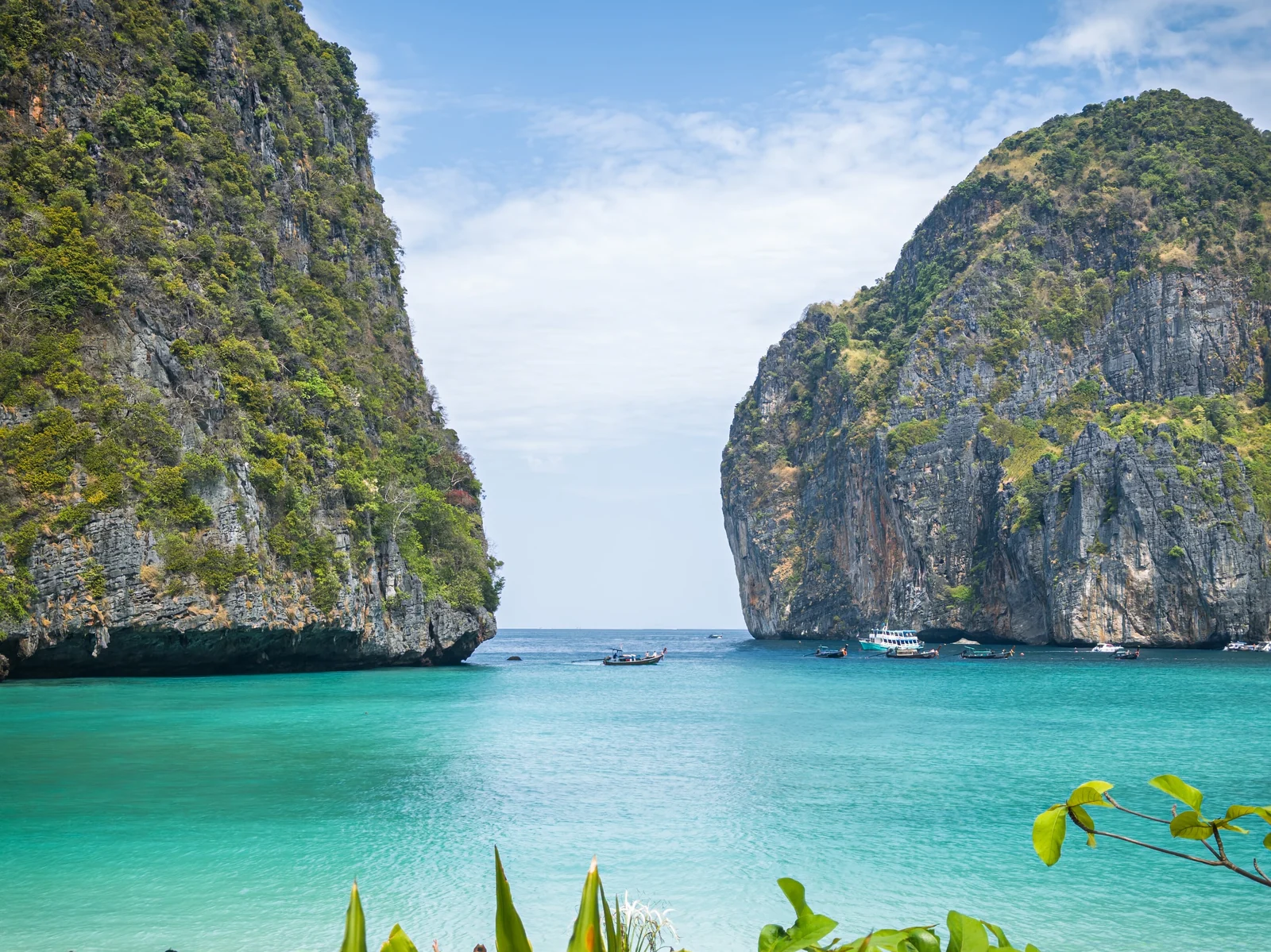
Krabi suits climbers, scenery hunters, couples and active travelers. Phi Phi works best as an overnight or a long day trip with an early start, because the midday boat crowds are the main complaint. Stay on Railay or Ao Nang if you want the landscape without the party.
Koh Lanta: The Slow Andaman Island
Koh Lanta, properly Koh Lanta Yai, is what many people picture when they ask for a quieter Thai island. It has a long string of west-coast beaches, an old fishing town on the east side and a national park at the southern tip. Nightlife is low-key, and many visitors find it easier to relax here than on Phuket or Phi Phi.
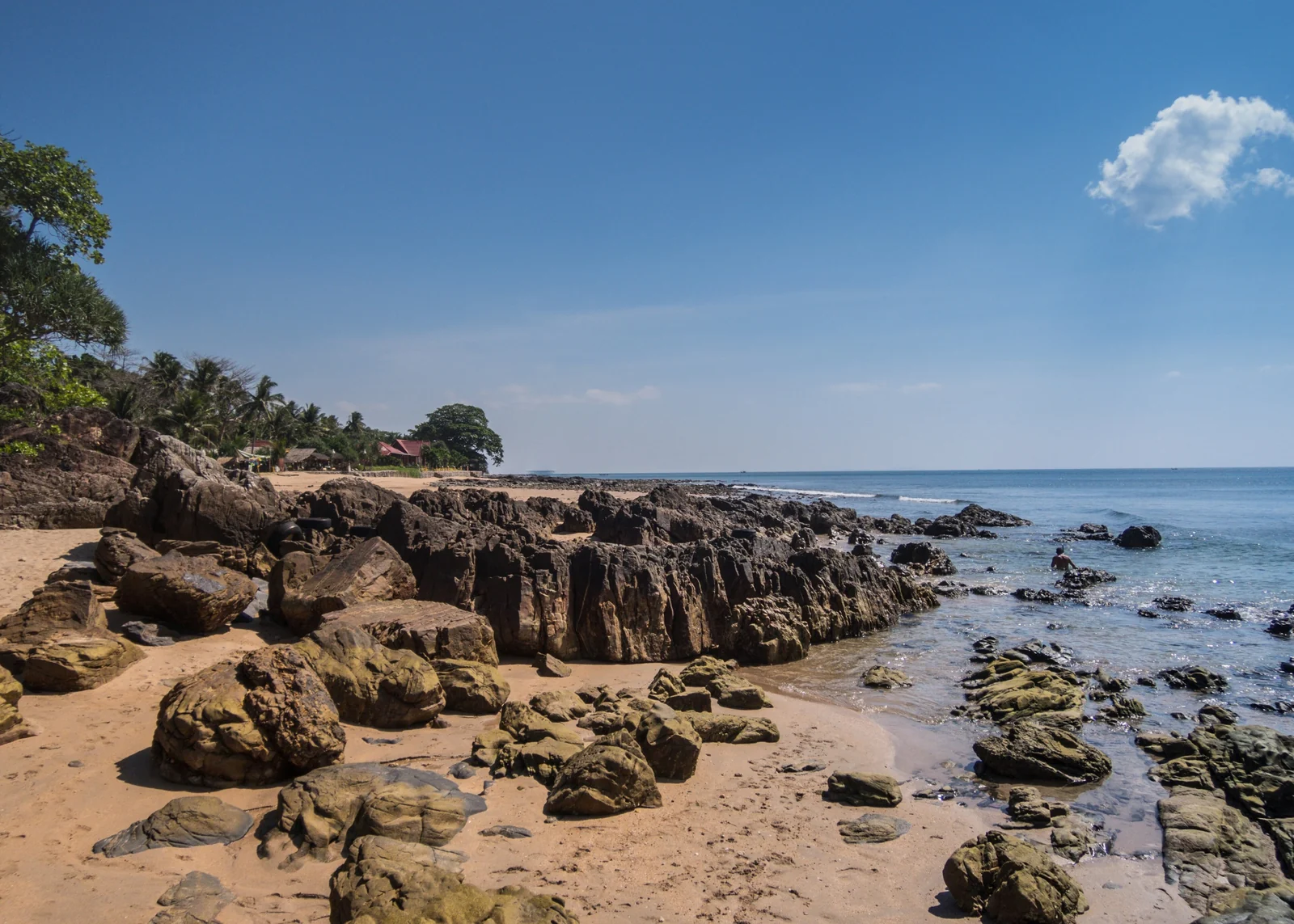
Lanta has no airport. The usual route is to fly into Krabi, then take a minivan that crosses short car ferries; allow a few hours door to door and confirm the details with your accommodation. It suits couples, families with older kids, divers and snorkelers heading to nearby reefs, and anyone who wants a slower pace. It is not the place for big-night-out travelers, and a few services shut down in the wet months.
Koh Samui: The Full-Service Gulf Island
Koh Samui is the gateway to the Gulf side, with its own airport and the widest range of beach resorts. Chaweng is the busiest beach, with shops and nightlife. Lamai is more relaxed. Bophut and its Fisherman's Village offer a calmer, more walkable base, and the quieter north and west coasts suit couples.
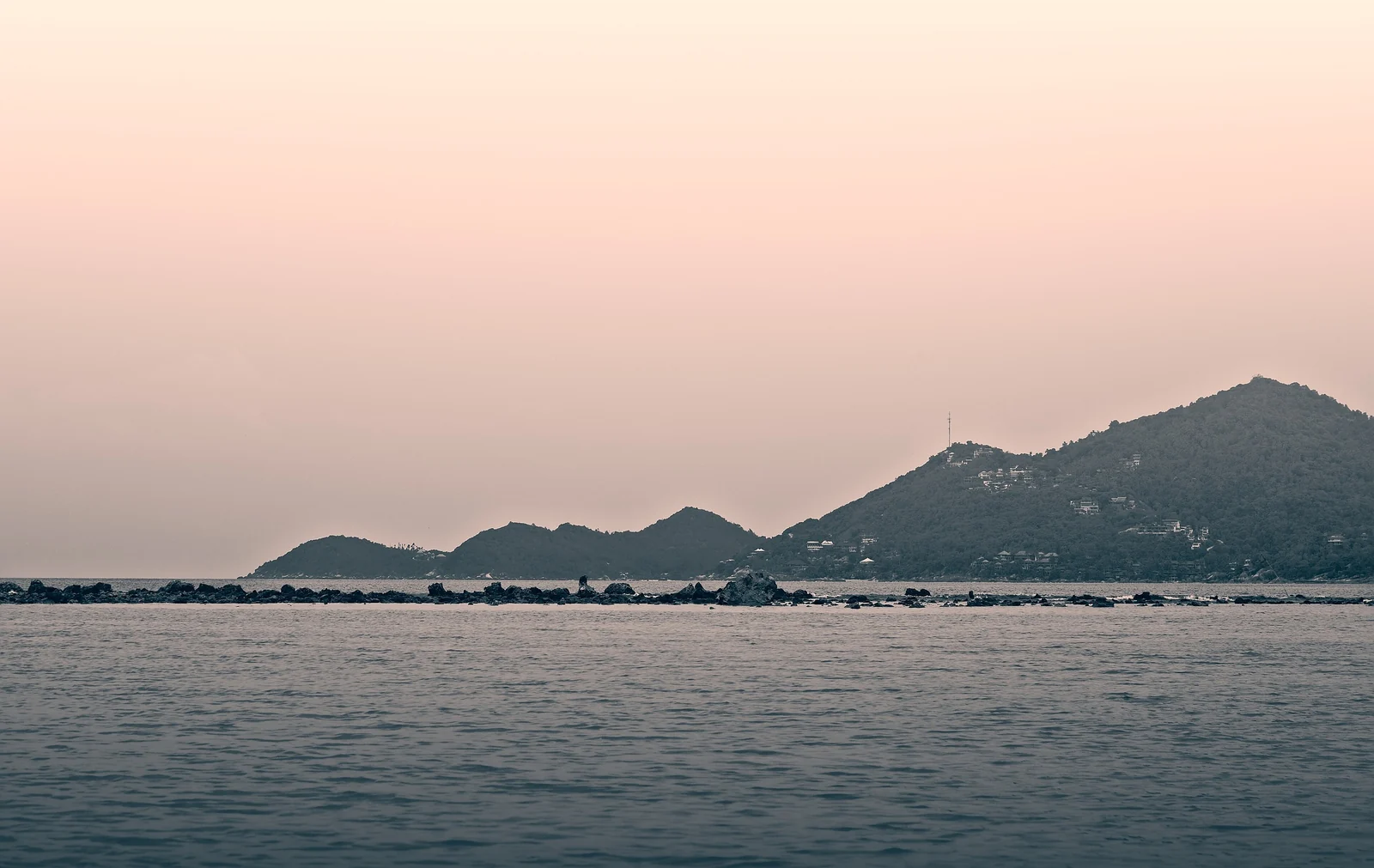
Samui is the right pick for travelers who want comfort, decent infrastructure and a base for day trips to Ang Thong Marine National Park or onward ferries to Phangan and Tao. The honest downside is that it has grown a lot, and some stretches feel built up. Its better-known weather advantage is timing: it tends to be drier than the Andaman coast in the middle of the year.
Koh Phangan and Koh Tao: Parties, Yoga and Diving
Koh Phangan
Phangan is famous for the Full Moon Party at Haad Rin, a huge beach party held around each full moon. Most of the island has nothing to do with it. Away from Haad Rin there are quiet coves, a strong wellness and yoga scene, and bays that are reached by rough roads or by boat, such as Thong Nai Pan. Choose your side of the island deliberately, because party and peace are far apart.
Koh Tao
Tao is the smallest of the three and built around diving. It is a major hub for learning to dive, with many schools, calm bays and shallow reefs close to shore. Even if you do not dive, snorkeling at places like Shark Bay and the walk to viewpoints give you plenty to do. It is compact, a little rustic and more backpacker than resort.
Both islands are reached by ferry, and neither has a commercial airport, so factor in sea conditions, especially toward the end of the year. Phangan suits party-goers and wellness seekers; Tao suits divers, snorkelers and budget travelers.
Which Island Fits Whom: At a Glance
| Island | Best for | Vibe | Best months |
|---|---|---|---|
| Phuket | First-timers, families, choice | Busy, varied, easy logistics | Roughly November to April |
| Krabi and Railay | Scenery, climbing, couples | Dramatic cliffs, active | Roughly November to April |
| Koh Phi Phi | Day trips, nightlife | Spectacular, crowded | Roughly November to April |
| Koh Lanta | Slow travel, families, divers | Quiet and relaxed | Roughly November to April |
| Koh Samui | Resorts, comfort, hub for the Gulf | Polished and developed | Roughly January to August |
| Koh Phangan | Parties, yoga, hidden bays | Split personality | Roughly January to August |
| Koh Tao | Diving, snorkeling, budget | Compact, laid-back | Roughly January to August |
Ferries and Flights: Getting Between Thai Islands
Most international travelers fly into Bangkok first; our Bangkok travel guide covers the capital. From there, the islands fall into a few simple patterns.
- Phuket and Krabi: both have airports with flights from Bangkok. Phuket also takes international arrivals directly, and Krabi has regular domestic service.
- Koh Samui: has its own airport, but fares are often higher than for the mainland. Many travelers instead fly to Surat Thani and take a bus-and-ferry combination.
- Koh Phangan and Koh Tao: no airport. Ferries run from Samui and from mainland piers, so you pair them with a Samui or mainland arrival.
- Koh Lanta: reached from Krabi by minivan and car ferry; some boat routes from Phuket and Phi Phi run mainly in the dry season.
- Between coasts: there is no quick sea link between the Andaman and the Gulf. Cross overland by bus, train or domestic flight, and allow most of a day.
Book ferries and minivans through your hotel or a reputable operator, and build in buffer time before an international flight. Seas can be rough in the wet season, and boats are sometimes delayed or canceled. Check the official Tourism Authority of Thailand site for current travel information.
Combining Islands: Sample Routes
Do not try to see everything. Two bases in one coast is a sensible limit for a typical vacation, and it saves a lot of time lost to transfers.
- Andaman circuit: Phuket, then Krabi or Railay, then Koh Lanta. Everything is reachable by road and short boat hops in the dry season.
- Gulf circuit: Koh Samui, Koh Phangan, then Koh Tao by ferry.
- Culture plus beach: start in the north with Chiang Mai, then fly south to a single island base.
If you want to compare with other tropical archipelagos, see our Philippines travel guide.
Practical Tips for Island Hopping in Thailand
- Book the wet-season flexibly. Choose cancellable rooms if you travel on the Andaman side between May and October.
- Respect the sea. Beaches may fly red flags in the wet season. Do not swim when they do; rip currents are a real risk.
- Protect the reef. Use reef-safe sunscreen where possible, never stand on coral and keep your distance from marine life.
- Carry some cash. Small beach shops, boat operators and street food often prefer it, even where cards are common.
- Check insurance. Make sure your policy covers boat transfers and any activity such as diving or motorbike riding. Wear a helmet if you rent a scooter.
- Pack light. Luggage limits on small boats and domestic flights can be strict.
Thailand Islands FAQ
Which Thai island is best for a first visit?
Phuket is the easiest first pick because of its airport, range of beaches and hotels, and boat trips to nearby islands. Krabi is better if scenery matters most, and Koh Samui suits travelers who want a polished resort base on the Gulf side.
Which side of Thailand is better, Andaman or Gulf?
Neither is better all year. The Andaman coast is at its best from roughly November to April. The Gulf islands tend to be drier from about January to August. Pick the coast that matches your travel dates, then pick the island.
What is the best Thai island for a quiet vacation?
Koh Lanta is the classic answer on the Andaman side, with long beaches and a slow pace. On the Gulf, the quieter coves of Koh Phangan and the north and west of Samui work well. Avoid Patong, Chaweng and Phi Phi's main village if peace is the goal.
Which Thai island is best for diving?
Koh Tao is the best known for learning to dive, with many schools and calm bays. On the Andaman side, Koh Lanta and Phuket have access to reef and wreck sites. Visibility and conditions vary by month, so ask a dive operator.
Can you visit Maya Bay?
Yes, but with limits. The bay reopened in 2022 after a closure for reef recovery, and visitor numbers, boat access and swimming are restricted. Rules can change, so check with the national park or your tour operator before booking a trip.
Is it possible to combine the Andaman and the Gulf islands?
It is possible, but there is no direct boat link, so you have to travel overland or fly between coasts. Most travelers stay on one coast per trip. If you do both, allow most of a day for the transfer and avoid tight flight connections.
How do you get to Koh Lanta?
Fly to Krabi, then take a minivan that includes short car-ferry crossings to the island. Allow a few hours in total. Some boat services from Phuket or Phi Phi run in the dry season only, so confirm schedules locally.