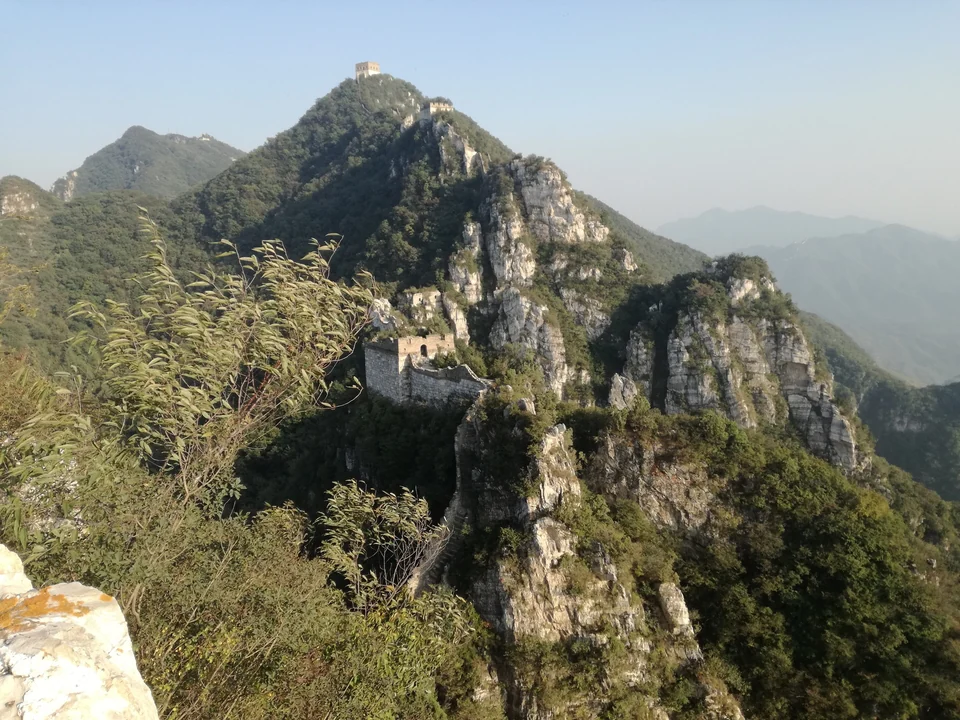
The Jiankou Great Wall hike is the best-known walk on the unrestored Great Wall near Beijing. Jiankou is a stretch of roughly 20 km of Ming-dynasty wall in Huairou District, about 70 km north of the capital, where crumbling brick towers ride a steep, forested ridge with no handrails, no ticket plazas and far fewer people than the famous restored sections.
It is also a place where access rules matter a great deal. Parts of Jiankou have been closed for protective restoration, and officials have spoken of a legal, managed route instead of free scrambling. So read the access section below and check current access with a licensed Beijing operator before you plan anything. This guide covers the history, the famous towers, the Jiankou to Mutianyu route, difficulty, safety, season and packing. For the wider picture of neglected stretches, see our piece on the abandoned regions of the Great Wall of China.
What Is Jiankou, the Wild Great Wall Near Beijing?
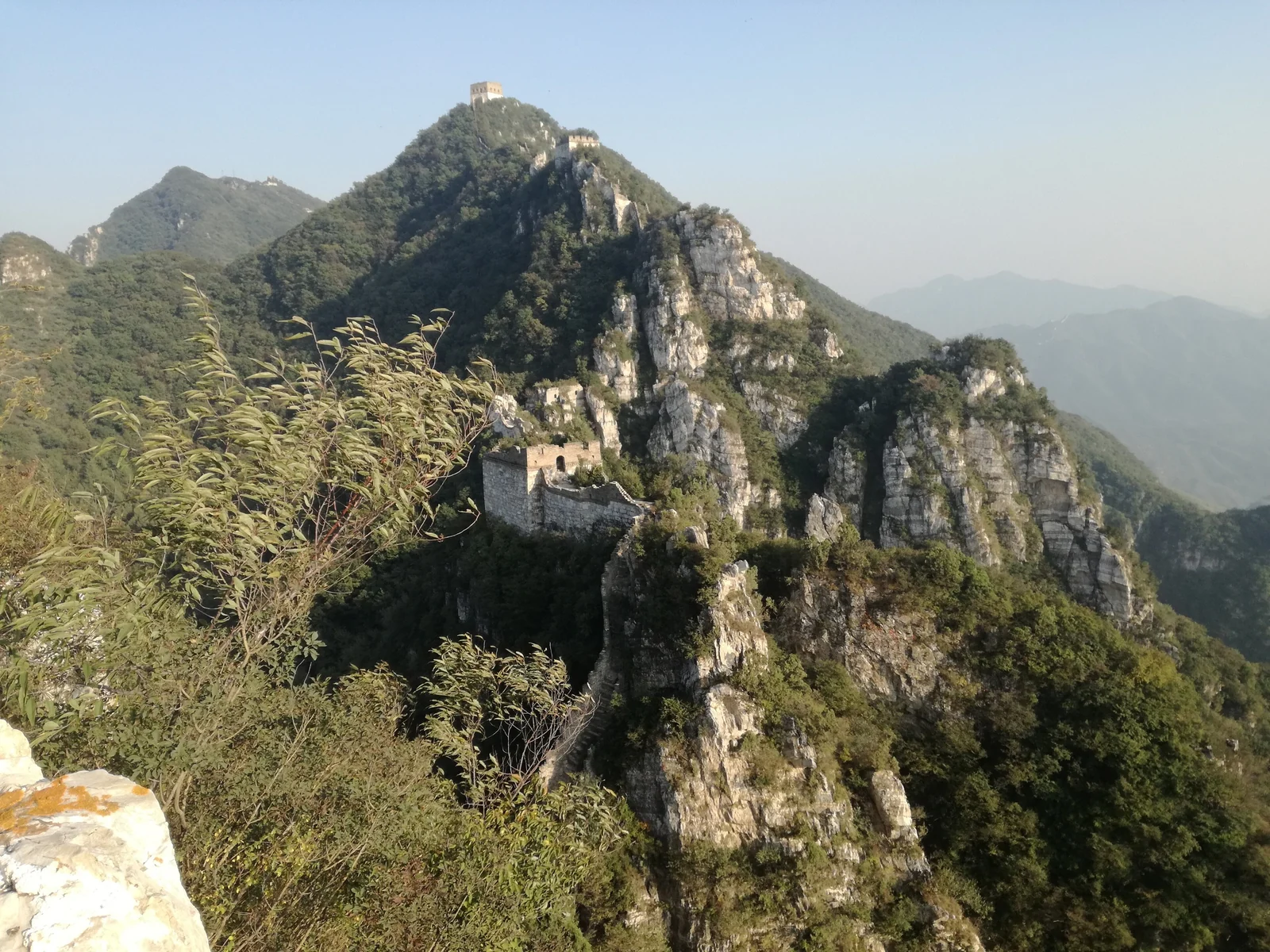
Jiankou lies between Mutianyu to the east and the Huanghuacheng side of the wall to the west. The Beijing Knot, a junction where several wall branches meet, is one of the landmarks of the ridge. Unlike Badaling or Mutianyu, Jiankou was never rebuilt for mass tourism. Most of what you see is original brick and stone, softened by weeds, scrub trees and centuries of weather.
That is exactly the appeal. The wall follows razor-thin ridges, drops into saddles and climbs again, so you can see how Ming engineers used the terrain as part of the defense. It is also why people call Jiankou the wild wall: stones are loose, parapets are missing and some steps are barely wider than a boot.
It is not a casual stroll, and it is not a place for a quick selfie stop. If you want a gentler first Great Wall day, a restored section is the better choice, and Jiankou can wait for a second visit when you are fitter and better prepared.
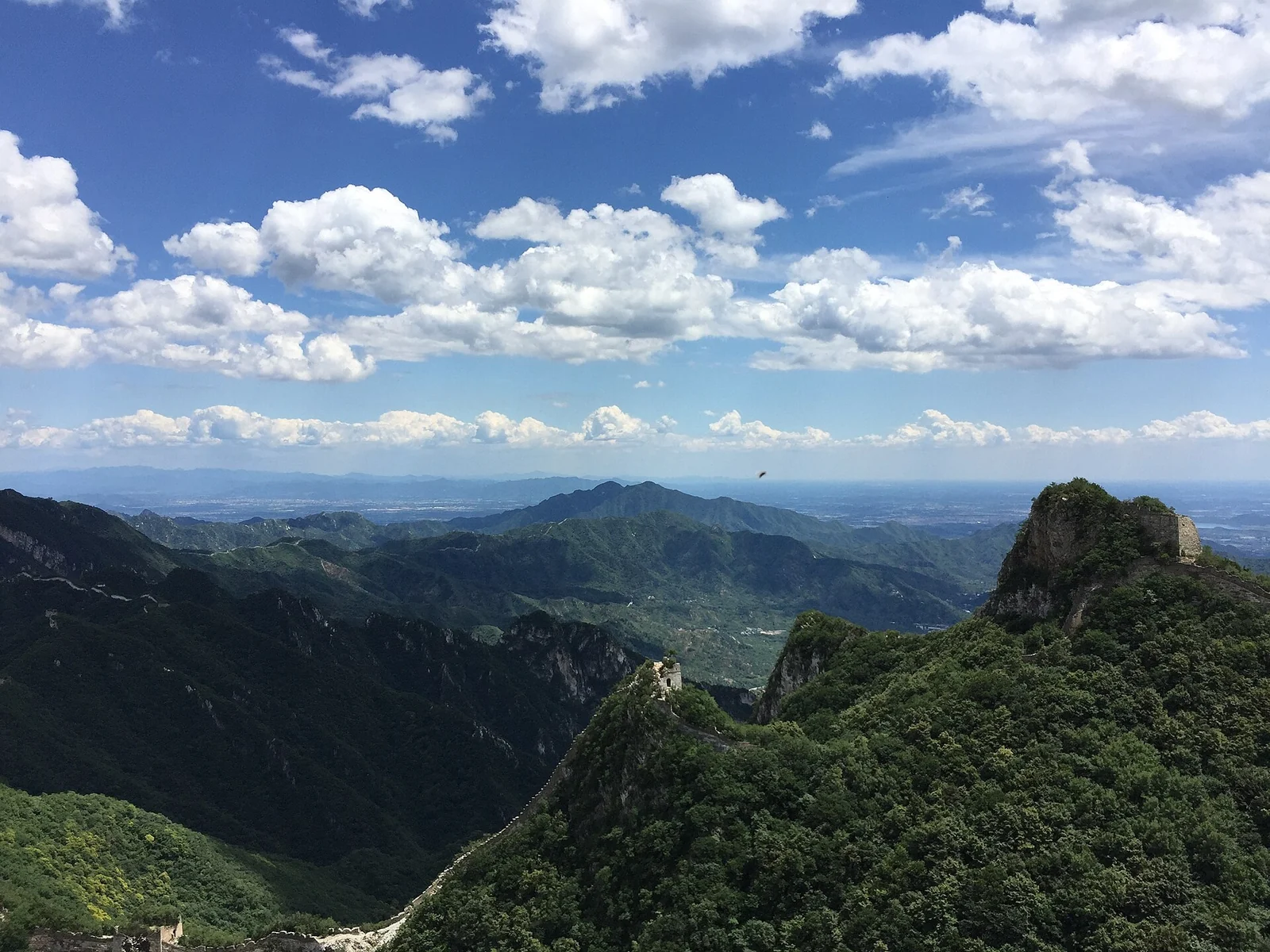
Jiankou History: Ming Walls and the Arrow Nock
The wall at Jiankou dates mainly to the Ming dynasty. Construction began in 1368, and rebuilding and strengthening of the northern defenses continued until the dynasty fell in 1644. The mountain passes north of Beijing were the shortest routes toward the capital, which made this ridge strategically important.
The name Jiankou is usually translated as Arrow Nock, the notch at the end of an arrow where the bowstring sits. The shape of the mountain and the way the wall folds around it is said to resemble that notch. The steep drops on either side did half the defenders' work, and the builders placed towers where they could watch the passes below.
The Great Wall as a whole was inscribed on the UNESCO World Heritage List in 1987, and the UNESCO listing is a good reference for the wider system. Jiankou itself is often described as one of the most precarious parts of the wall near Beijing, because weathering, erosion and heavy foot traffic are slowly pulling it apart.
The Nine-Eye Tower, Zhengbei Tower and the Famous Sections
Most Jiankou itineraries are built around a handful of landmarks. Knowing what each one is helps you decide how far you want to go.
Nine-Eye Tower
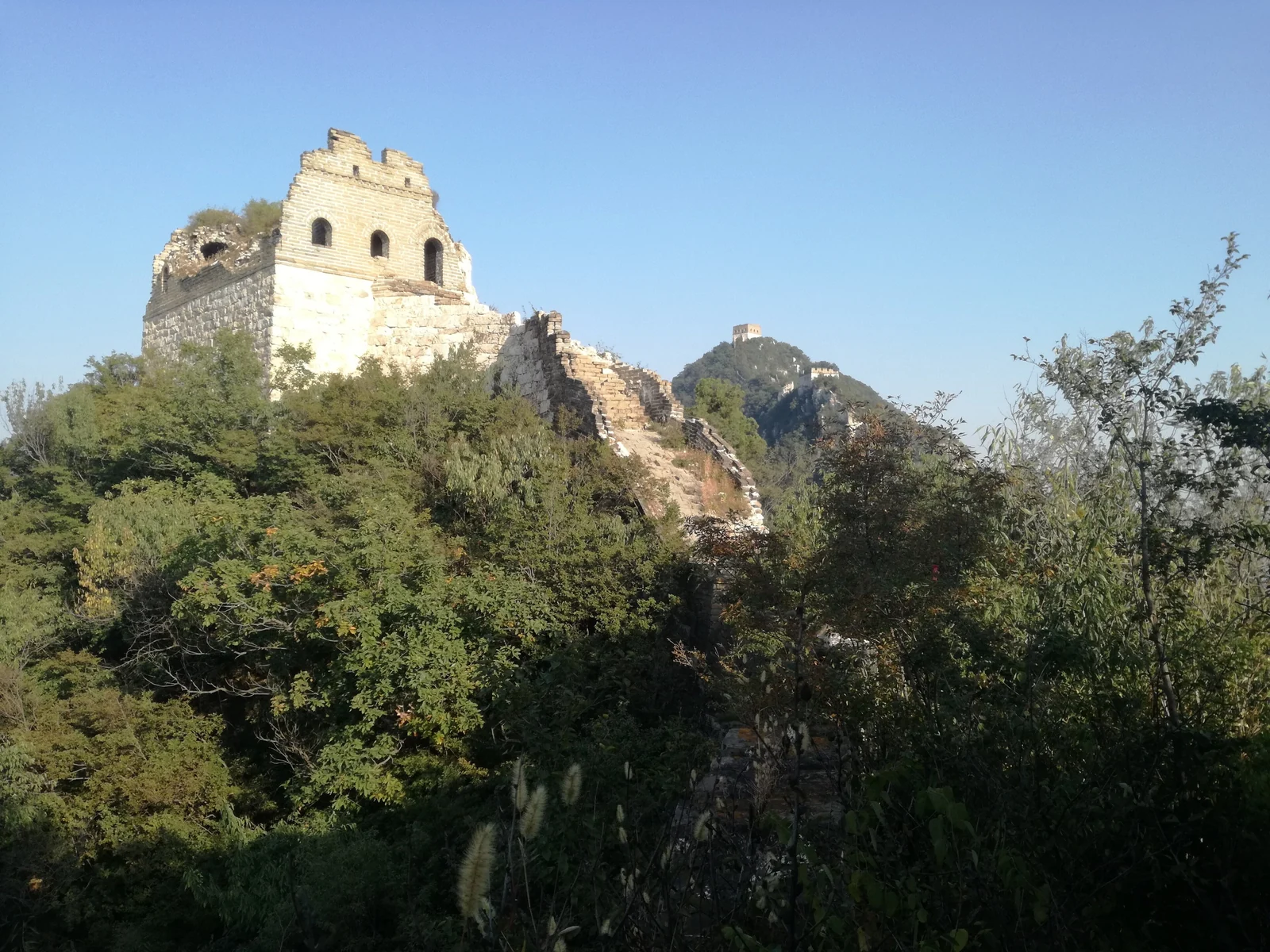
The Nine-Eye Tower is the landmark of Jiankou and the most photographed building on the ridge. It is named for the arched openings, or eyes, in its walls, which let guards watch several directions. It is a large, multi-chamber tower, and from the ridge you can look into its roofless interior and see the wall running away on both sides.
Zhengbei Tower
Zhengbei Tower, often rendered as the Facing North Tower, stands high on the ridge and gives wide views of folded mountains with the wall climbing away in both directions. Many hikers use it as a rest stop and a photo point, and it is a common place to turn around for anyone who does not want the full route.
Sky Stairs and the Heavenly Ladder
The Sky Stairs, also called the Heavenly Ladder or Sky Ladder, is a very steep run of narrow steps on a thin ridge. The steps are worn and the wall on either side is little wider than the stairs themselves. It looks dramatic in photographs, but it is the spot where an accident is most likely, so treat it with respect and skip it if you are uneasy with exposure.
The Rollercoaster and the Ridge Hikes
The Rollercoaster is the nickname for a sequence of sharp ups and downs along the wall, and the Eagle Flies Facing Upward tower is among the better-known high points on the ridge. These ridge hikes reward fit walkers with long views, but they are demanding: you gain and lose height again and again, often on uneven, loose stone.
Jiankou to Mutianyu Hike: The Classic Route
The Jiankou to Mutianyu hike is the route most people mean when they talk about hiking the wild wall. It starts on the unrestored ridge at Jiankou, passes the major towers, then continues east until the wall becomes the restored Mutianyu section, where paths, stairs and visitor facilities make the finish easy.
Operators usually plan it as a long half day to a full day, depending on pace and how long you linger for photos. Because Mutianyu is set up for visitors, it is a practical endpoint: you descend to a managed attraction instead of hiking back along the dangerous ridge, and your driver can meet you there.
Routes and start points change when restoration work or rules change, so do not plan a fixed itinerary from an old blog post. Ask your guide which towers and sections are currently permitted, and be ready to shorten the walk if the weather or the group's pace calls for it.
| Section | What to expect | Who it suits |
|---|---|---|
| Approach and first climb | Steep path up to the wall, loose stone | Anyone with basic fitness |
| Nine-Eye Tower area | Famous tower, wide views, many photo spots | Most hikers |
| Zhengbei Tower | High point with long views | Confident hikers |
| Sky Stairs | Very steep, narrow and exposed | Experienced hikers, no fear of heights |
| Rollercoaster ridge | Repeated climbs and descents | Fit, sure-footed hikers |
| Mutianyu end | Restored wall, easier descent | Everyone |
Is Jiankou Great Wall Closed? Access and Rules
This is the question that matters most, and the honest answer is that the situation changes. Parts of the Jiankou wall have been closed to the public for protective restoration, and local officials in Huairou have described a legal, managed tourist route on a short stretch instead of open access to the whole ridge. China Daily also notes that the section has seen hiker casualties over the years.
Hiking outside an official route can be restricted, and it can leave you without rescue or insurance cover. Treat access as something you confirm every time. Contact the district tourism authority, check Visit Beijing for current guidance, and book only a licensed operator who can explain what is currently allowed, including any ticket or permit. If the wild ridge is closed, walk a restored section instead and you will still get the wall, the views and the history.
Difficulty and Safety on the Wild Wall
Jiankou is a hard walk by Great Wall standards. The wall is steep, uneven and unrestored, and some of the most photographed spots have no railing. You will use your hands in places, and a slip on loose stone can have serious consequences.
- Go with a guide. Do not hike alone. Mobile signal is poor along the ridge, so a guide with local knowledge is your safety net.
- Skip it after rain. Wet stone and soil are slippery, and thunderstorms are dangerous on an exposed ridge.
- Know your limits. If the Sky Stairs or a narrow ridge feels wrong, turn around. The towers and views are worth the same effort at a lower-risk point.
- Carry insurance. Check that your travel policy covers hiking on unrestored walls.
- Start early. You want daylight to spare, especially on the long Jiankou to Mutianyu route.
Best Time to Hike Jiankou
Spring and autumn are the best seasons. Temperatures are comfortable, the air is usually clearer than in summer, and autumn adds color to the hillsides. Summer can be hot and humid with heavy afternoon rain, which makes the stone slippery. Winter is cold and can bring ice on the steepest steps, a real hazard on a ridge without handrails.
Whatever the season, check the forecast and the air quality before you go. Haze removes the long views that are the main reward, and a clear day after a stretch of dry weather usually gives the sharpest visibility.
Getting to Jiankou From Beijing
Jiankou is in the mountains of Huairou District, roughly 70 km north of central Beijing. There is no simple public-transport link to the trailhead, so most visitors arrive by private driver or as part of a guided tour that includes pickup in the city. Allow around two hours each way, more in heavy traffic.
If you finish at Mutianyu, your guide can arrange for the car to wait there, which saves backtracking. Mutianyu is a popular restored section with its own visitor facilities, and it is a sensible fallback if the wild ridge is closed on your day.
Beijing is a big city, so pair the hike with some time in the capital. Our China travel guides and the wider Asia section cover more places to plan around, and the Seoul travel guide is a useful next stop if you are linking East Asian cities.
What to Pack for the Jiankou Hike
- Hiking boots with ankle support and a grippy sole; trail runners are not enough on loose stone.
- Plenty of water and lunch. There is little to buy along the wall, so carry what you need.
- Layers, a hat, sun protection and a light rain jacket.
- Gloves for scrambling and a small first-aid kit.
- A fully charged phone, a power bank and an offline map, since signal is weak.
- A small daypack that keeps your hands free for the steep sections.
Photography Tips at Jiankou
Early and late light gives the best contrast on the brick and the ridgelines. Morning haze can look moody, but heavy haze flattens the view, so a clear day is better. A wide lens suits the towers and ridges, and a short telephoto helps compress the wall as it climbs away from you.
Keep your balance first. Do not step backward for a shot on a narrow wall, and never stand on a parapet. If you want to fly a drone, check local rules and permits first, because flying near protected heritage can be restricted.
Preservation and Leave No Trace
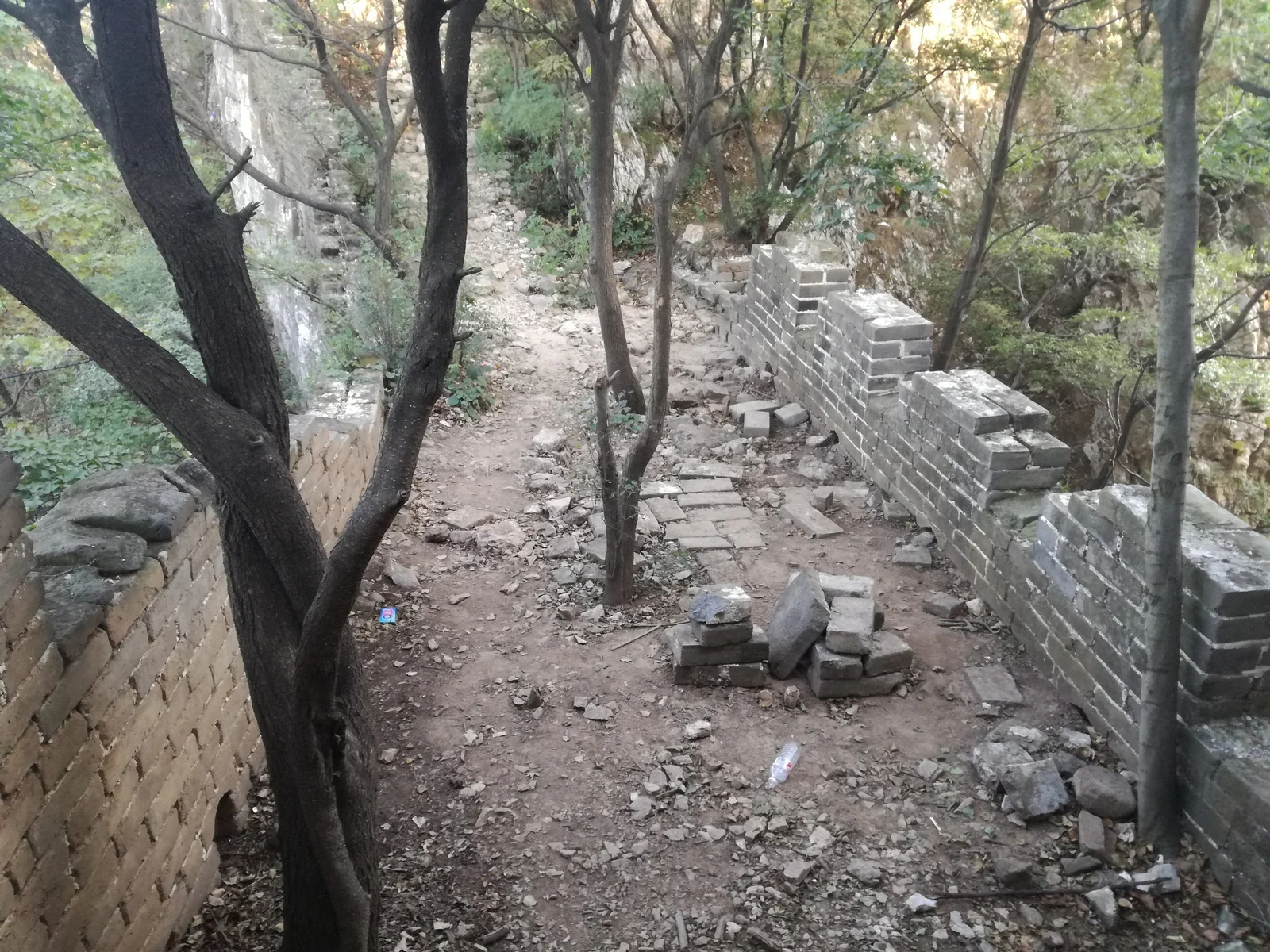
Jiankou survives partly because it is remote, but remoteness is also why it is fragile. Rain, frost and plant roots keep loosening the brick, and visitors add to the damage when they climb on parapets, carry off stones or scratch names into the wall.
- Take every piece of trash back out with you, including food wrappers.
- Never take bricks or stones, and never write or carve on the wall.
- Stay on the paths already walked and avoid climbing on weak sections.
- Use official routes and licensed guides, which supports the restoration work that keeps the wall standing.
Respecting the access rules is part of that care. A managed route is not meant to spoil the adventure; it is meant to keep the wall there for the next walker.
Jiankou Great Wall FAQ
Is Jiankou Great Wall closed?
Parts of Jiankou have been closed for protective restoration, and officials have described a managed route on a short stretch. Access rules change, so check current access with the local tourism authority or a licensed operator before you book.
How hard is the Jiankou Great Wall hike?
It is a demanding hike. The wall is unrestored, steep and uneven, with loose stone and sections without railings. Reasonable fitness, good boots and a guide are essential, and the Sky Stairs are best left to experienced hikers.
How long does the Jiankou to Mutianyu hike take?
Plan on a long half day to a full day, including breaks and photos. The time depends on your pace, the weather and which sections are currently open, so ask your guide for an estimate that fits your group.
Can I hike Jiankou without a guide?
It is not recommended. Signal is poor, the terrain is risky and access rules can restrict unguided hiking. A licensed guide knows the current rules, the safest line along the ridge and what to do if someone is hurt.
What is the best time to hike Jiankou?
Spring and autumn are best, with mild temperatures and generally clearer air. Avoid hiking after rain, in thunderstorms or when ice is on the steps, because the exposed ridge becomes much more dangerous.
How do I get to Jiankou from Beijing?
Jiankou is roughly 70 km north of central Beijing in Huairou District. Most visitors go by private driver or a guided tour with pickup, which usually takes around two hours each way depending on traffic.