


Santorini is a volcanic island in the southern Cyclades, about 230 kilometers southeast of Athens. Its white villages cling to the rim of a flooded caldera, with cliffs dropping hundreds of meters to the sea, and the view from the top is one of the most recognizable in Europe.
This Santorini travel guide covers what to see and do on the island, from Oia and the Fira-to-Oia hike to the Bronze Age town of Akrotiri, volcano boat trips and wineries. It also explains the best time to visit, where to stay, how to get there and how to avoid the worst of the crowds. If you are still choosing between islands, start with our Greece travel guide.
Why Santorini Looks the Way It Does
Santorini, officially called Thira, is what remains of a volcano that collapsed during a series of eruptions. The biggest, the Late Bronze Age “Minoan” eruption in the 17th or 16th century BC, was one of the largest volcanic events in human history. It left a vast sea-filled caldera ringed by cliffs, with the main island forming a crescent on its eastern side.
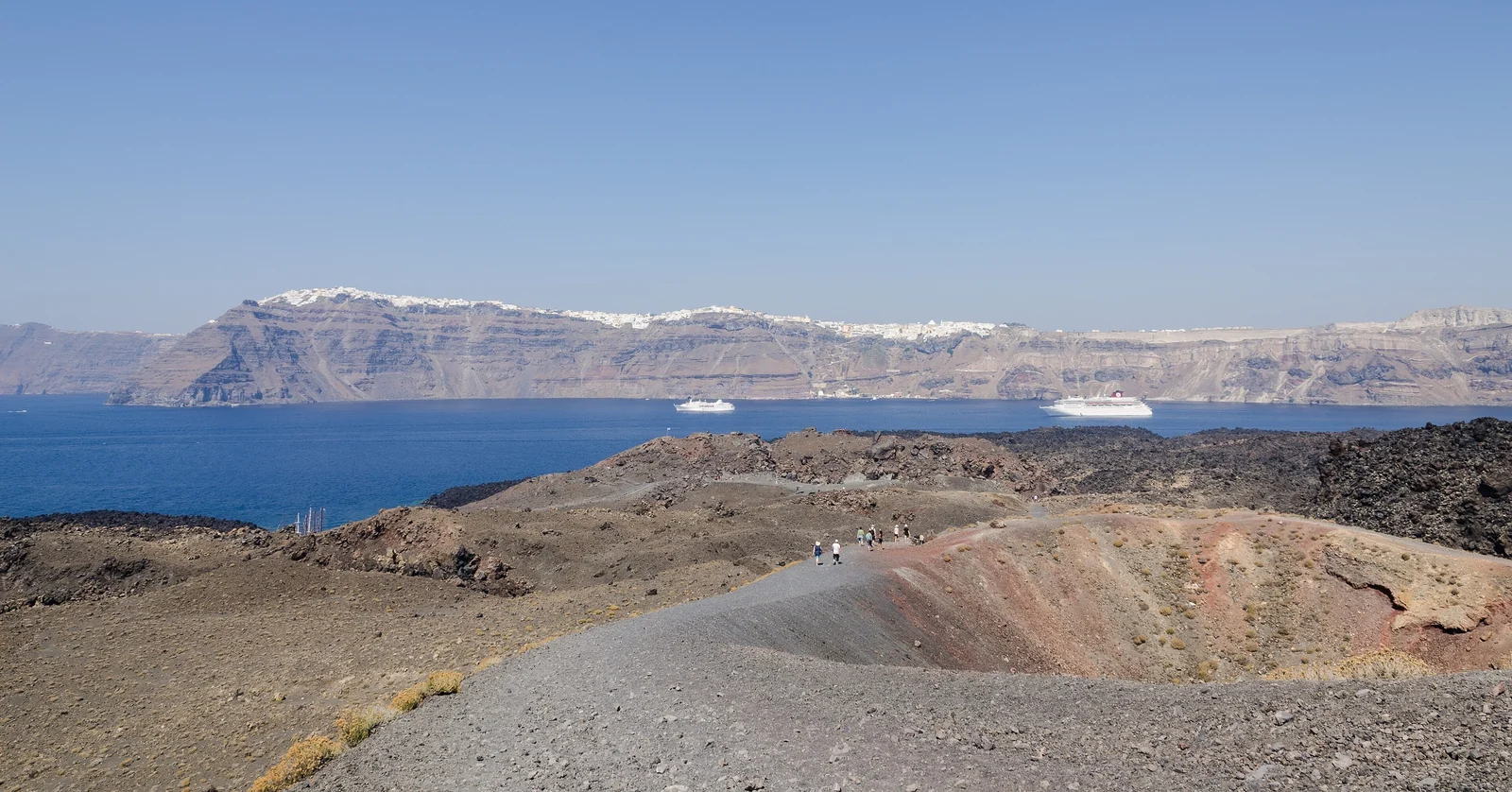
The volcano is still active. The dark islands of Nea Kameni and Palea Kameni in the middle of the caldera were built by later eruptions, the most recent in 1950. In early 2025 an intense earthquake swarm between Santorini and Amorgos led to a temporary state of emergency. Tourism has since resumed, but it is sensible to check Greek civil protection advice before you travel.
Best Things to Do in Santorini
Walk the caldera rim from Fira to Oia
The path from Fira through Firostefani and Imerovigli to Oia is roughly 10 kilometers and is the best free experience on the island. It is paved in the first villages and becomes a rougher, exposed trail past Imerovigli, with some climbs and little shade. Start early, carry water and take a bus or taxi back.
See Oia, and the sunset, wisely
Oia, at the northern tip, is the postcard village of blue domes, windmills and cave houses. It is also the most crowded place on Santorini at sunset, when viewpoints near the castle ruins fill up long before the sun goes down. Visit Oia in the morning, and consider watching the sunset from Imerovigli, Pyrgos or the Akrotiri lighthouse instead.
Explore prehistoric Akrotiri
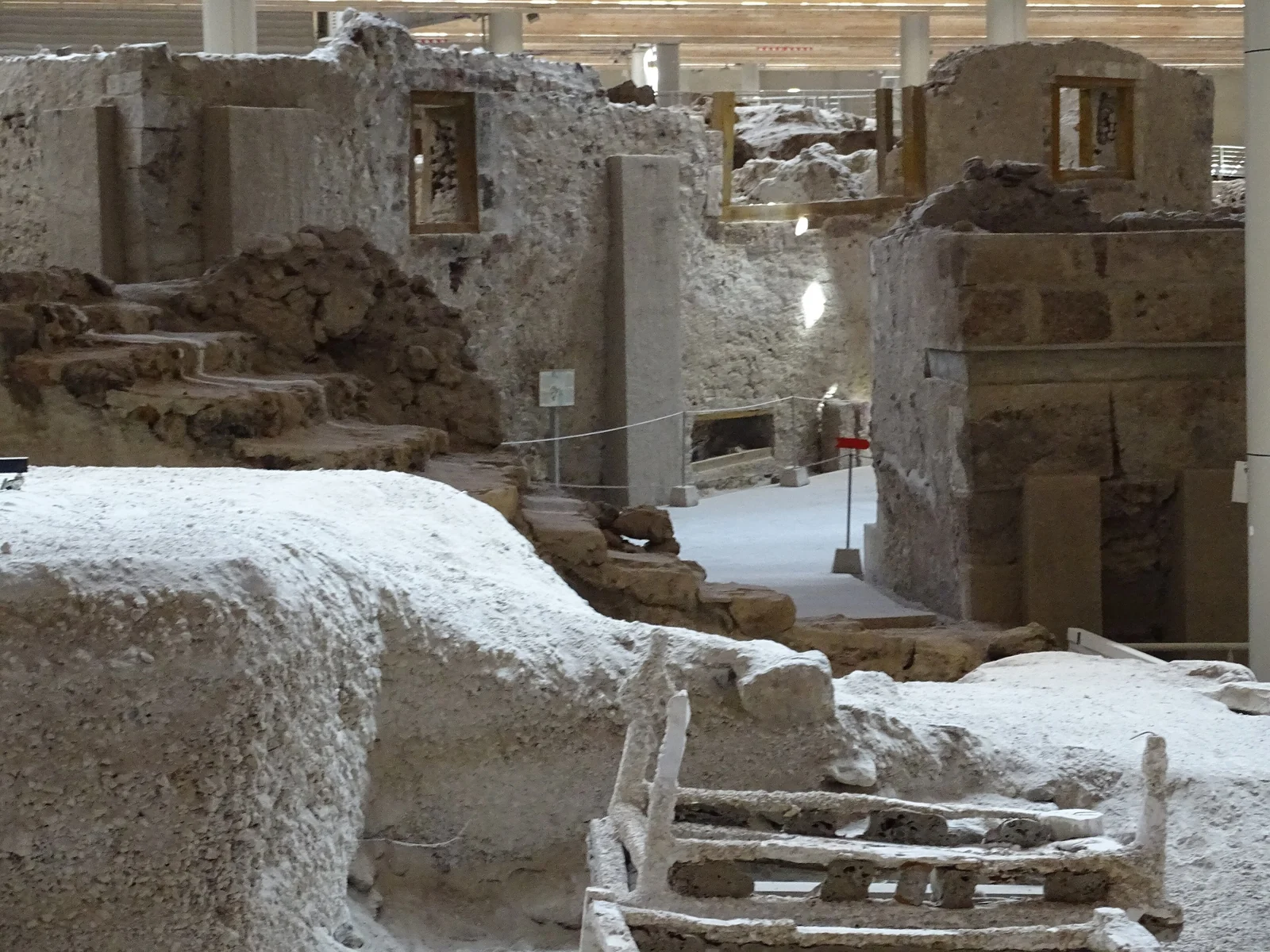
Buried by the Bronze Age eruption, the town of Akrotiri on the south coast is one of the best-preserved prehistoric settlements in the Aegean. Under a protective roof you walk along streets lined with houses up to three stories high, with drainage channels and storage jars still in place. Systematic excavation began in 1967 under Spyridon Marinatos and continues today.
Its famous wall paintings are displayed in the Museum of Prehistoric Thera in Fira and the National Archaeological Museum in Athens. Check current hours and ticket prices on the Greek Ministry of Culture’s official Akrotiri page.
Take a boat trip into the caldera
Boat excursions from the old port below Fira or from Ammoudi Bay below Oia take you to Nea Kameni, where a short hike leads across black lava to the active crater with steaming fumaroles. Many trips also stop to swim at the warm, iron-rich springs off Palea Kameni and continue to the small island of Thirasia. Sunset catamaran cruises are popular too.
Visit Ancient Thera and Pyrgos
On a rocky ridge between Kamari and Perissa, Ancient Thera preserves the ruins of a later Greek town with a theater, agora and temples, and superb views of both coasts. Inland, the hill village of Pyrgos has a castle core of narrow lanes, fine views and far fewer visitors than Oia.
Beaches: black, red and white sand
Santorini’s beaches are volcanic, so expect dark sand and pebbles. Kamari, Perissa and Perivolos on the east and south coasts are long, organized black-sand beaches. The famous Red Beach near Akrotiri sits beneath unstable cliffs, and access has been restricted repeatedly because of rockfall risk; obey warning signs and view it from the lookout or by boat.
Santorini Food and Wine
Volcanic soil, little rain and strong winds shape Santorini’s produce. Look for fava, a creamy purée made from the island’s yellow split peas; tomatokeftedes, fritters made with small, intensely flavored cherry tomatoes; white eggplant; and caper leaves in salads.
The island is also one of Greece’s most distinctive wine regions. Its signature grape, Assyrtiko, makes crisp, mineral white wines, and many vines are trained low into basket-shaped coils that protect the grapes from wind. Wineries around Pyrgos, Megalochori and Episkopi Gonias offer tastings, and several have terraces with caldera or sea views. Try Vinsanto, the island’s traditional sweet wine made from sun-dried grapes.
Best Time to Visit Santorini
The best time to visit Santorini is from late April to June or in September and October. The weather is warm, the sea is swimmable from June, and the villages are calmer than in July and August, when heat, cruise ships and high prices peak.
| Period | Weather and crowds | Tip |
|---|---|---|
| April–May | Mild, fresh, sea still cool | Good for hiking and Akrotiri |
| June and September | Warm to hot, busy but manageable | Best all-round months |
| July–August | Hot, windy days, peak crowds and prices | Book months ahead, sightsee early |
| October | Warm days, thinner crowds | Some boats and restaurants cut back hours |
| November–March | Cool, many hotels closed | Quiet, low prices, limited ferries |
Cruise traffic has a big effect on the caldera towns. Since July 2025, cruise passengers landing on Santorini pay a per-person port fee that is highest from June to September. If you are staying on the island, check which days several large ships are in port and plan Fira and Oia visits around them.
Where to Stay in Santorini
- Fira and Firostefani: central, with the most restaurants and the main bus station. Good for first-timers without a car.
- Imerovigli: the highest point of the caldera rim, quieter than Oia, with some of the best views on the island.
- Oia: iconic and romantic, but crowded by day and the most expensive area. Best for a special-occasion stay.
- Kamari and Perissa: beach villages on the east coast with more affordable hotels and direct access to the sea.
- Pyrgos and Megalochori: traditional inland villages close to wineries, ideal if you have a car.
Caldera-view rooms are often reached by long flights of steps, which matters if you have heavy luggage or limited mobility. Ask your hotel about porter service before booking.
How to Get to Santorini and Get Around
Santorini’s airport has frequent flights from Athens, which take under an hour, and in summer many direct flights from European cities. Ferries run from Piraeus and Rafina near Athens, and from other Cyclades islands such as Naxos, Paros, Ios and Mykonos. The crossing from Piraeus takes from around five hours on high-speed boats to eight hours or more on conventional ferries.
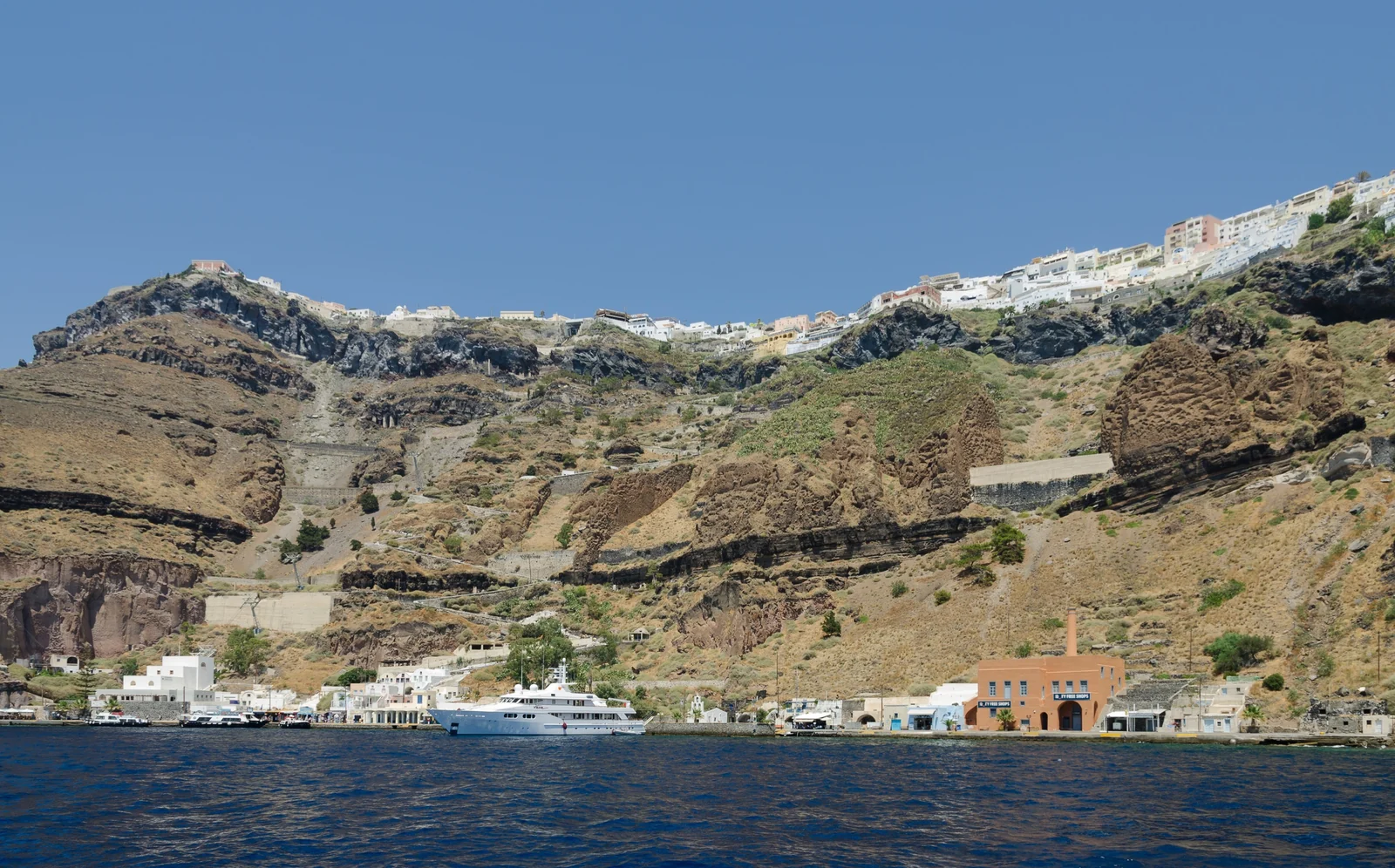
Most ferries arrive at Athinios port, below the cliffs on the west coast, where buses and taxis wait. On the island, the KTEL bus network links Fira with most villages and beaches. A rental car or scooter gives more freedom, but parking in Fira and Oia is difficult in summer. Between the old port and Fira, use the cable car or the stepped path; animal welfare groups urge visitors not to ride the donkeys.
Tips for a Responsible Santorini Trip
- Stay on marked paths along the caldera and away from cliff edges and fenced areas, especially after rain or earthquakes.
- Carry a refillable bottle; drinking water is scarce on the island and largely produced by desalination.
- Visit popular spots early in the morning or in the evening after cruise passengers have left.
- Spend money in family-run tavernas, wineries and shops, and respect privacy on terraces and rooftops, which are often private homes or hotel spaces.
If Santorini feels too busy, combine it with a quieter island. Our guide to lesser-known places in Greece includes Amorgos, a ferry ride away, while Rhodes suits travelers who want more history and longer beaches. See all our Greece guides for more ideas.
Santorini FAQ
How many days do you need in Santorini?
Three full days is a good minimum. That gives you time for the Fira-to-Oia hike, a caldera boat trip, Akrotiri and a winery, plus a beach afternoon. With two days you can see the highlights but will feel rushed, especially if you arrive by ferry.
Is Santorini safe after the 2025 earthquakes?
The earthquake swarm of early 2025 caused a temporary state of emergency but no major damage to tourist infrastructure, and tourism has resumed. Seismic activity is monitored by the Greek authorities. Follow official civil protection guidance and any path closures while you are on the island.
Can you swim in Santorini?
Yes. The east and south coasts have long black-sand beaches such as Kamari, Perissa and Perivolos, and boat trips stop to swim at the warm springs near Palea Kameni. The sand gets very hot in summer, so bring beach shoes.
Is the Fira to Oia hike difficult?
It is moderate rather than technical. The route is roughly 10 kilometers with several climbs, uneven surfaces and very little shade after Imerovigli. Most people take three to five hours with stops. Avoid midday in summer and wear proper shoes.
Where is the best place to watch the sunset in Santorini?
Oia is the classic choice but extremely crowded. Imerovigli, Firostefani, the castle at Pyrgos and the lighthouse at Akrotiri offer excellent sunsets with more space. A sunset boat trip in the caldera is another popular option.
Do I need a car in Santorini?
Not necessarily. Buses from Fira reach most villages and beaches, and taxis and transfers are available. A car or scooter helps if you want to visit wineries, Pyrgos and remote beaches, but parking in Fira and Oia is very limited in high season.