
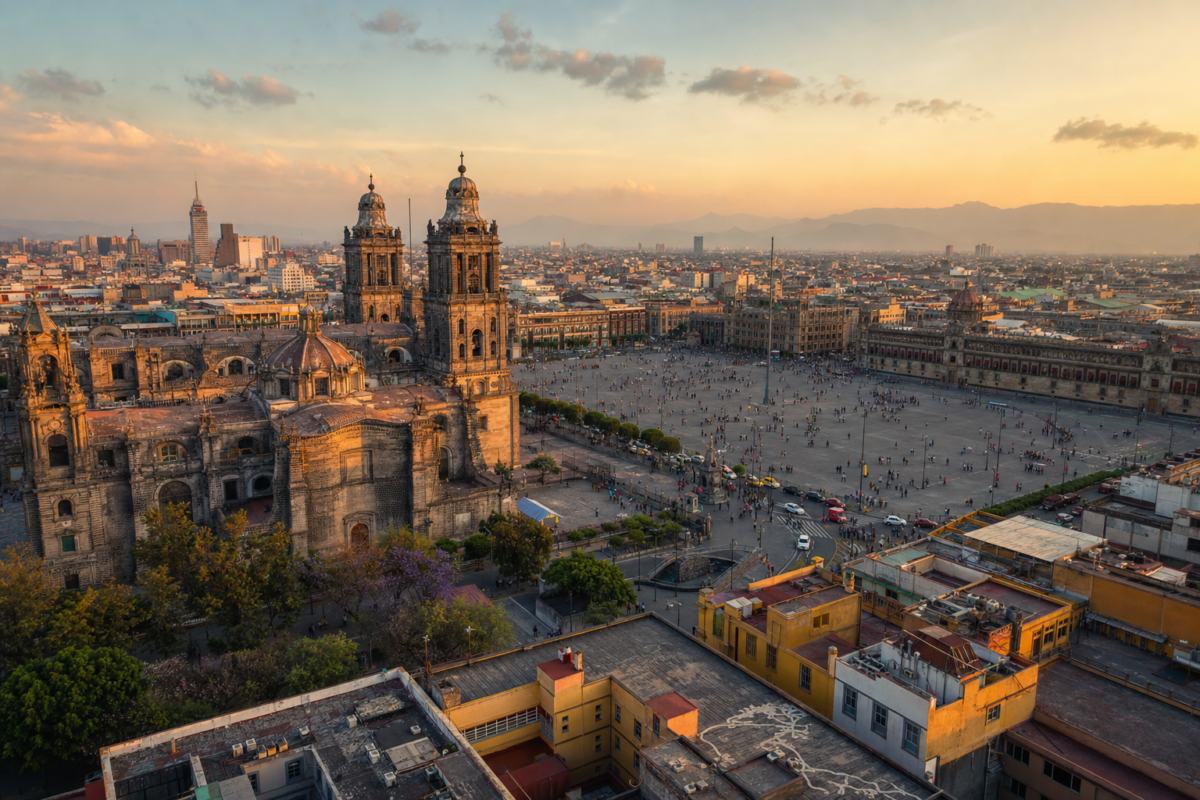
Mexico City travel guide planning begins with one useful truth: this immense capital is not a single experience but a collection of historic districts, creative neighborhoods, monumental museums, leafy parks and unforgettable kitchens. Built over the remains of the Aztec capital Tenochtitlan, modern Mexico City rewards travelers who slow down, organize each day by neighborhood and leave room for spontaneous discoveries.
This guide brings together the best things to do in Mexico City, essential food experiences, practical transport advice and a flexible first-time itinerary. Whether you come for pre-Hispanic history, world-class art or late-night tacos, the city delivers a trip with remarkable depth.
Ideal stay
4 to 5 days
Best time
March-May and October-November
Perfect for
Culture, food, art and architecture
Mexico City at a Glance
Mexico City sits in the Valley of Mexico at an elevation of roughly 2,240 meters. Its altitude, scale and traffic shape the rhythm of a visit: plan lighter first-day activities, drink plenty of water and group attractions geographically. The historic center, Chapultepec, Roma-Condesa, Coyoacan and Xochimilco each deserve focused time rather than rushed cross-city journeys.
Why Mexico City Belongs on Your Travel List
Few capitals layer ancient and contemporary life so visibly. At the Templo Mayor, the ceremonial center of Tenochtitlan stands beside the Metropolitan Cathedral and the National Palace. A short ride away, independent galleries, design studios and ambitious restaurants animate neighborhoods filled with Art Deco and modernist architecture. Add more than 150 museums, sprawling public markets and one of the world’s most dynamic street-food cultures, and the result is a destination that supports both a quick city break and a much longer exploration.
Top Things to Do in Mexico City
1. Explore the Zocalo and Historic Center
Begin in the vast Plaza de la Constitucion, usually called the Zocalo. Step inside the Metropolitan Cathedral, examine the archaeological layers at the Templo Mayor Museum and walk along pedestrian Calle Madero toward the Palacio de Bellas Artes. Look up as you go: tiled facades, carved stone portals and grand civic buildings reveal several centuries of urban history.
2. Spend Half a Day in Chapultepec
Bosque de Chapultepec is both an urban forest and a major cultural district. The National Museum of Anthropology is the essential stop, with galleries devoted to Mexico’s Indigenous civilizations and the famous Mexica Sun Stone. Chapultepec Castle adds panoramic views and nineteenth-century history. Reserve timed museum tickets where possible and avoid trying to cover every gallery in one visit.
3. Walk Roma Norte and Condesa
These adjacent neighborhoods are ideal for an unhurried afternoon. Walk beneath jacaranda and ash trees, browse bookstores and small galleries, and pause around Parque Mexico or Avenida Amsterdam. The pleasure lies in the street life and architecture as much as in any individual attraction.
4. Discover Frida Kahlo’s Coyoacan
Coyoacan retains the atmosphere of a historic town despite being part of the metropolis. Book the Frida Kahlo Museum well in advance, then explore the plazas, the San Juan Bautista church and the food market. Nearby, the Anahuacalli Museum presents Diego Rivera’s pre-Hispanic art collection in a dramatic volcanic-stone building.
5. See the Murals and Palacio de Bellas Artes
Mexico’s mural tradition transforms public buildings into visual history lessons. The Palacio de Bellas Artes contains works by Diego Rivera, David Alfaro Siqueiros and Jose Clemente Orozco. Continue to the Secretariat of Public Education or the Antiguo Colegio de San Ildefonso when exhibitions and access schedules allow.
What to Eat in Mexico City
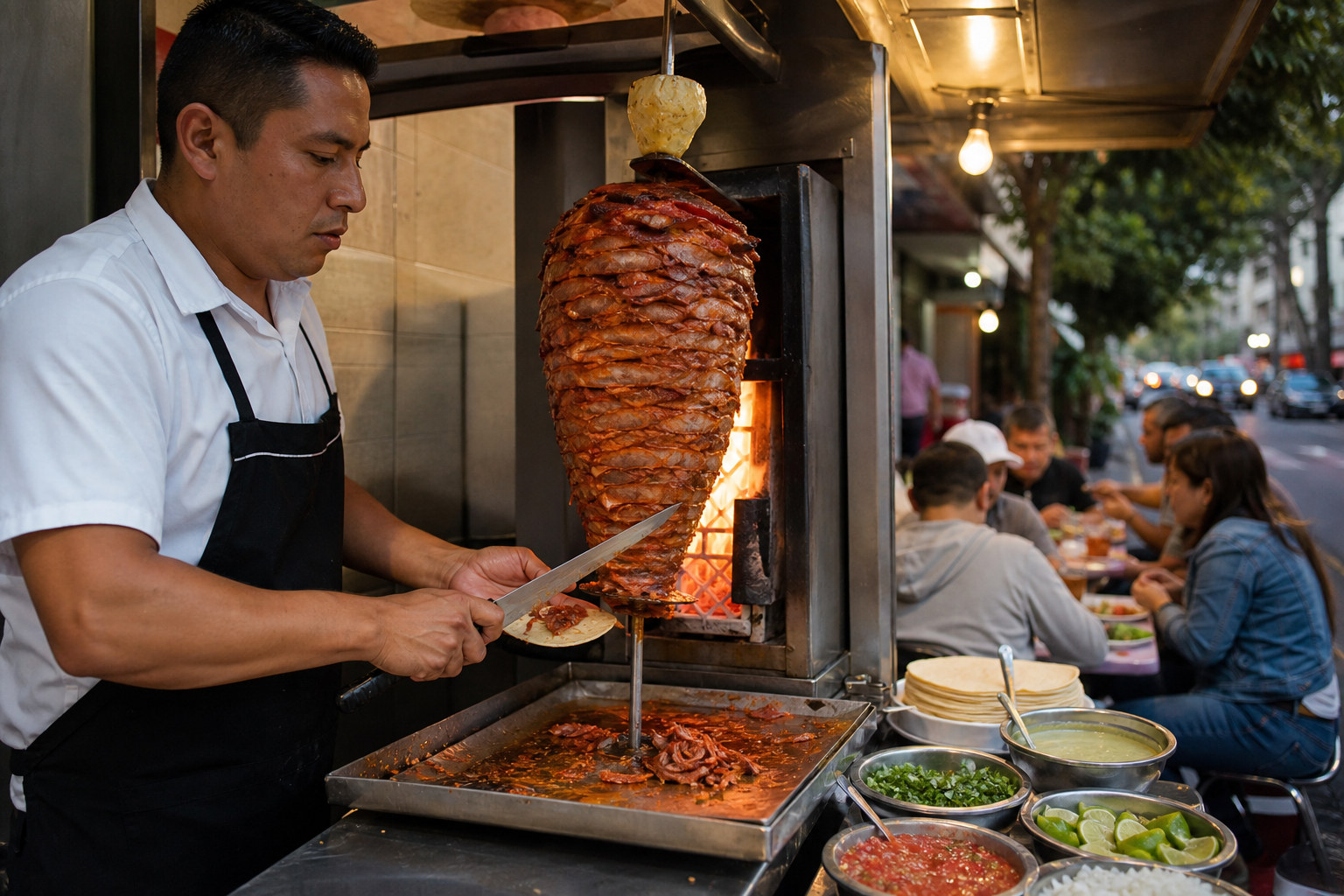
Mexico City street food is not a side attraction; it is one of the most direct ways to understand the capital. Start with tacos al pastor, then try suadero, carnitas, barbacoa or grilled vegetables according to your preferences. Tamales make a practical breakfast, while tlacoyos arrive filled with beans or cheese and topped with nopales and salsa.
At markets, look for seasonal fruit, fresh juices, tostadas and traditional sweets. Choose busy stalls where ingredients turn over quickly, watch food handling and begin cautiously with very spicy salsa. For a broader picture, balance street stands with a neighborhood fonda, a classic cantina and one contemporary Mexican restaurant.
Xochimilco: Canals, Chinampas and Living Heritage
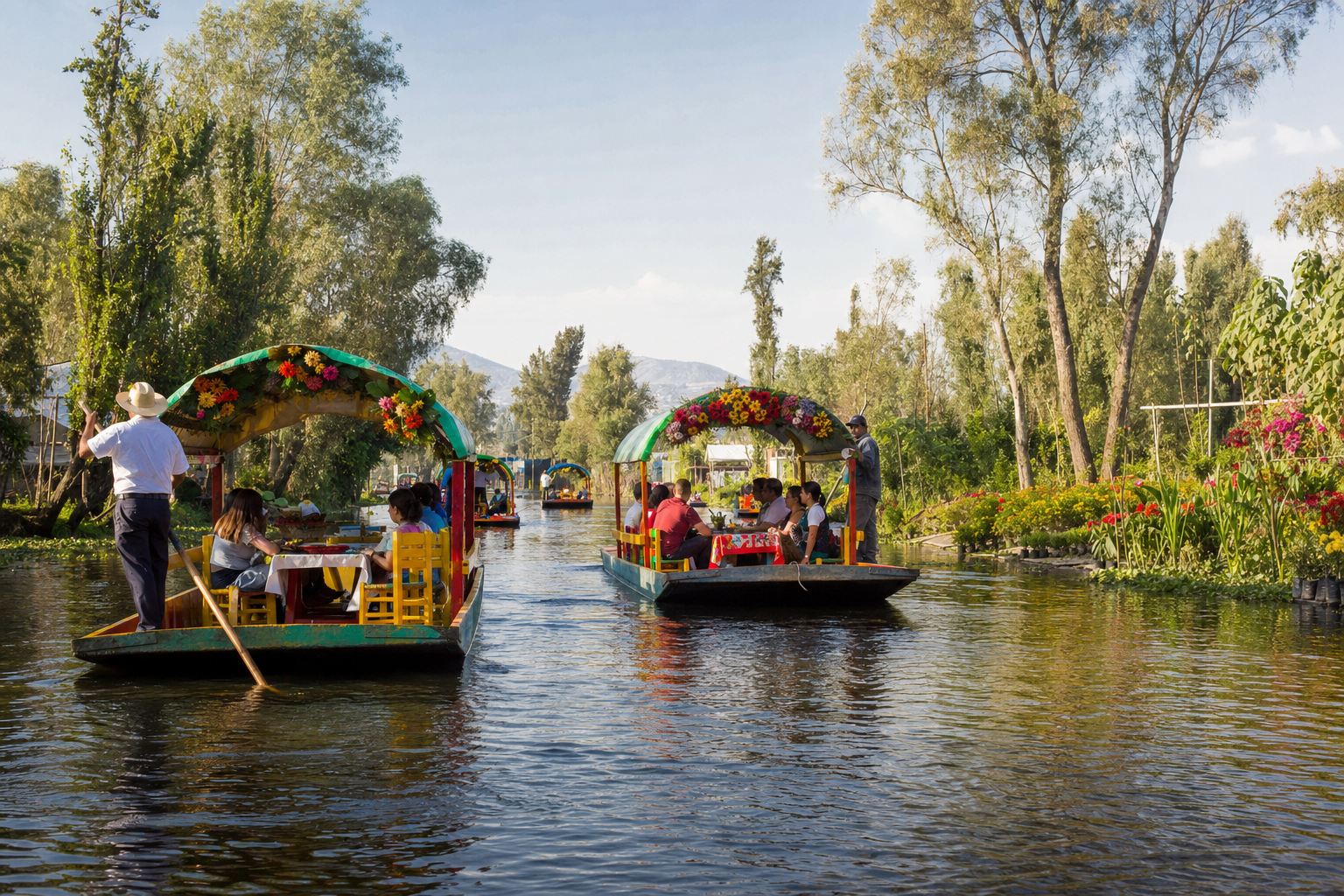
Xochimilco preserves part of the lake-and-canal landscape that once defined the Valley of Mexico. A trajinera ride is the best-known experience, but the area’s deeper story lies in its chinampas, productive island plots that have supported agriculture for centuries.
Visit in the morning for softer light and calmer waterways. For a more meaningful trip, choose an ecological route or a local operator that explains chinampa farming and canal conservation. Agree on the duration and official rate before departure, and keep music volume respectful around residents and wildlife.
Best Time to Visit Mexico City
March to May: Clear Days and Spring Color
Spring generally brings warm afternoons, cooler evenings and jacaranda blossoms. It is also a popular period, so accommodation and major attractions should be reserved early.
June to September: Green Landscapes and Afternoon Rain
The rainy season often means bright mornings followed by showers later in the day. Pack a compact rain layer and schedule outdoor sights before lunch. The city looks especially green, and rainfall rarely eliminates an entire day of exploration.
October to November: Culture and Comfortable Weather
Autumn offers pleasant temperatures and major cultural traditions. Day of the Dead events attract intense interest; plan well ahead and approach community observances respectfully rather than treating them only as photo opportunities.
December to February: Dry, Bright and Cool
Winter days are often sunny, while nights can feel surprisingly cold because of the altitude and limited indoor heating. Layers are more useful than one heavy garment.
A 4-Day Mexico City Itinerary
Day 1: Historic Mexico City
Allow time to adjust to the altitude while exploring the Zocalo, Cathedral, Templo Mayor, Calle Madero and Palacio de Bellas Artes. Finish with sunset views from a rooftop or the Torre Latinoamericana.
Day 2: Chapultepec and Roma-Condesa
Spend the morning at the National Museum of Anthropology. Continue through Chapultepec Park, then use the late afternoon and evening for Roma Norte and Condesa.
Day 3: Coyoacan and University City
Visit the Frida Kahlo Museum at your reserved time, explore Coyoacan’s center and continue to the UNAM campus to see its landmark modernist architecture and mosaic-covered Central Library.
Day 4: Xochimilco and a Food-Focused Evening
Travel south for an early canal excursion. Return for a relaxed lunch, browse a market and spend your final evening sampling tacos or booking a guided food walk.
Practical Mexico City Travel Tips
Getting Around
The Metro, Metrobus and trolleybus networks cover much of the city at low cost. Avoid peak commuter hours with luggage, keep valuables secure and use a rechargeable mobility card. For late evenings or direct journeys, use an authorized taxi stand or a reputable ride-hailing service and verify the vehicle details before entering.
Altitude and Pace
Give your body a gentle first day, hydrate regularly and limit alcohol until you know how the elevation affects you. Sun protection matters even when temperatures feel mild.
Money and Language
Cards are common in hotels and established restaurants, but cash in Mexican pesos remains useful at markets and small stands. Basic Spanish greetings and polite phrases make everyday interactions easier.
Staying Aware
Mexico City is vast and conditions vary by neighborhood and time of day. Ask your accommodation about current local guidance, use well-traveled routes, avoid displaying expensive equipment and check official travel advice before departure.
Quick Planning Checklist
- Reserve the Frida Kahlo Museum early.
- Group each day by neighborhood.
- Carry water, sunscreen and a light rain layer.
- Keep small peso notes for markets.
- Check museum closure days, especially Mondays.
- Download an offline map before exploring.
Mexico City Travel Guide FAQ
Four to five days provide enough time for the Historic Center, Chapultepec, Roma-Condesa, Coyoacan and Xochimilco without crossing the city repeatedly.
March, April, October and November often combine comfortable temperatures with appealing cultural or seasonal experiences. Conditions vary, so check the forecast before packing.
Individual districts are highly walkable, but the metropolitan area is too large to explore entirely on foot. Combine neighborhood walks with public transport or authorized car services.
The capital is celebrated for tacos al pastor, tacos de suadero, tamales, tlacoyos, quesadillas, tortas, churros and an enormous range of regional Mexican cooking.
Yes, especially when you choose a morning or ecological route that connects the canals with chinampa agriculture and local heritage rather than focusing only on entertainment.
Visitors generally use sealed bottled or properly filtered water. Confirm the filtration system with your accommodation and use the same care for ice when uncertain.
Prioritize the Frida Kahlo Museum, popular restaurants, special exhibitions and accommodation during major festivals or holiday periods.